


Why the Kitchen Had to Come First
I can’t even begin to put into words what this kitchen renovation means to me. To say it’s going to be life-changing feels like an understatement—but it’s the only place to start. (Note: these first two renovation posts are pretty detailed, but the rest will each cover a smaller range of subjects.)
Quick backstory: our realtor in Montclair wasn’t even planning on showing us this house. Instead, one of my kind, wonderful followers—who happens to live across the street—took a photo from his living room window, sent it to me on Instagram, and said that while he had no idea what our budget was or where we were looking, he thought I might want to know the house across the street was coming on the market.
Not going to lie, I was a little creeped out at first. 😂 But then we saw the street. And the house. And the backyard. It was love at first sight. (And for the record: I completely adore this neighbor—he’s one of the kindest humans, and this is still my favorite Montclair story to tell.)
When I say love at first sight, what I really mean is that we saw the potential. Because the kitchen? It was… adequate at best. So much so that our realtor didn’t even think this house would be an option for us. She knew exactly wh at I was looking for in a kitchen, and this was very much not it.
But the wheels started turning immediately. Even though the house itself is large, the first-floor footprint isn’t. From day one, we knew that if we were going to build a true dream kitchen, we’d need to bump out the back. The goal was never excess—it was intention. A kitchen that felt open, light-filled, and connected to the rest of our lives.
When a Kitchen Becomes a Bottleneck
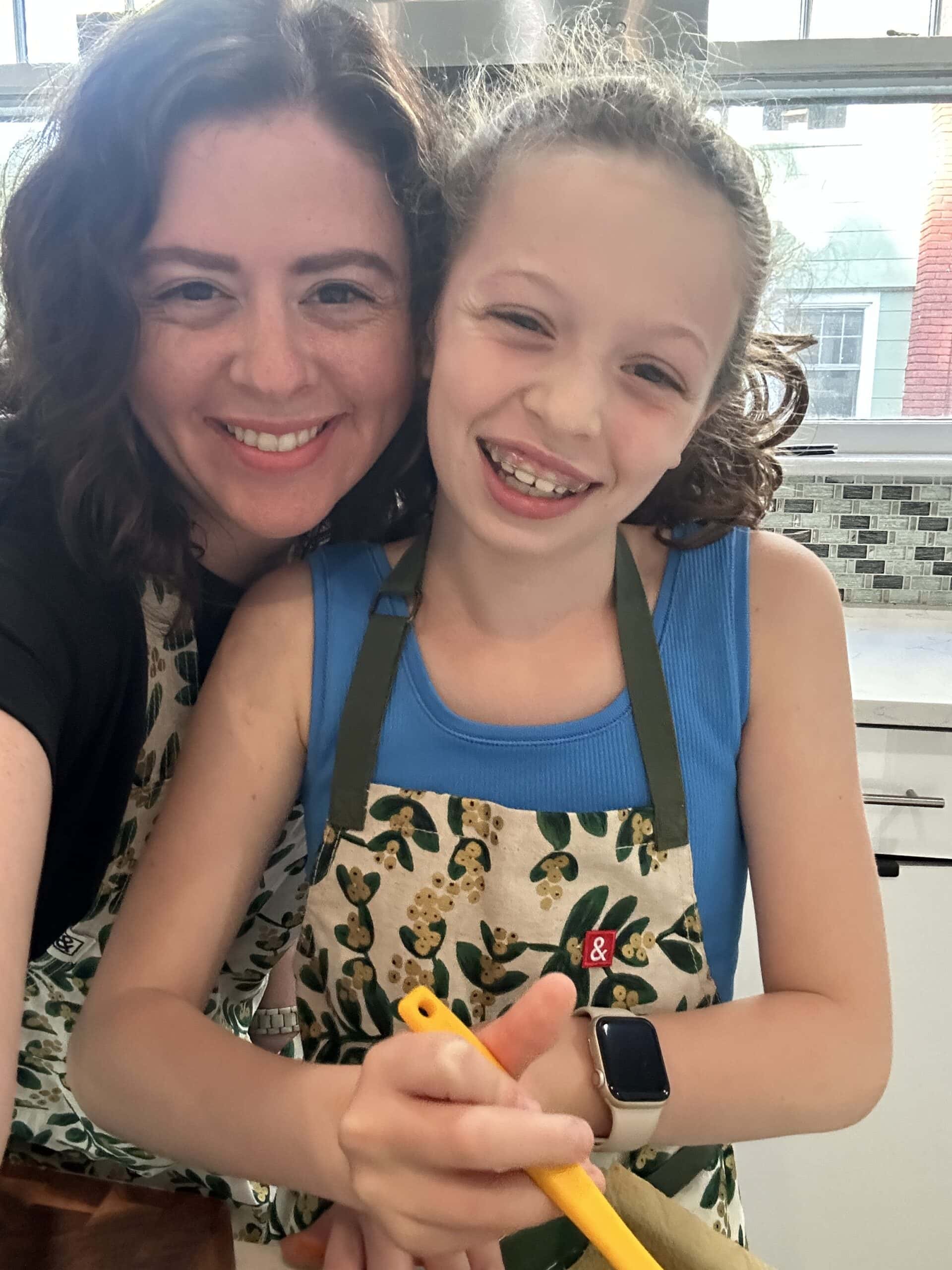
The biggest issue with our old kitchen wasn’t just what didn’t work—it was who couldn’t be in it. Our family of five simply couldn’t eat, talk, or exist in the kitchen at the same time. Unless, of course, everyone was willing to stand in a corner or scoot out of the way every time I yelled, “Hot! Behind!” like we were in a restaurant kitchen.
There was exactly one clear path to the sink—and my husband was almost always standing in it.
That same frustration showed up whenever we had friends over. There was nowhere comfortable for people to sit while I cooked. Guests perched on backless stools because we didn’t have space for anything better. The kitchen only truly worked when I was in it alone—which is the opposite of how I wanted this house to feel.
That tension—between cooking and connection—became the clearest signal that the kitchen needed to be rethought entirely.
I’ll be sharing more about how this realization shaped our layout in a future post.
Designing Around Real Life (Not Just Square Footage)
Even once we committed to expanding the house, we were incredibly conscious of the kitchen’s footprint. The goal wasn’t to make it as big as possible. It was simply to make it work better.
Flow mattered more than size. And that meant getting very clear on our priorities early on.
At a high level, we knew the kitchen needed to:
- comfortably seat our entire family in one place
- allow multiple people to move through the space without constant collisions
- offer clear sightlines into the family room and out to the backyard
- support real, everyday cooking—not just look good on paper
Every design decision that followed flowed from those non-negotiables.

The Work Triangle—As a Framework, Not a Rule
We absolutely considered the classic kitchen work triangle—the relationship between the sink, stove, and refrigeration—but we treated it as a framework, not a rigid rule.
Modern kitchens are asked to do a lot more than they were when this concept was first introduced. Ours needed to support serious cooking, multiple people moving through the space, and a large island dedicated entirely to seating and prep—not appliances.
The work triangle still mattered, but it had to flex to accommodate how we actually live and cook.

The Island as the Heart of the Kitchen
From the very beginning, I knew I wanted the island to function differently than most. I didn’t want it to be a utility zone filled with sinks, ranges, or visual clutter. I wanted it to be a place for gathering—for prepping food, sitting down, and staying connected while I cooked.
That single decision influenced everything else: appliance placement, traffic flow, seating layout, even how the rest of the kitchen wrapped the perimeter of the room. The island became the emotional and physical center of the space.
It wasn’t the easiest choice—but it was the right one for us.
I’ll be sharing exactly why I refused to put anything on the island—and what that choice required elsewhere—in its own post.
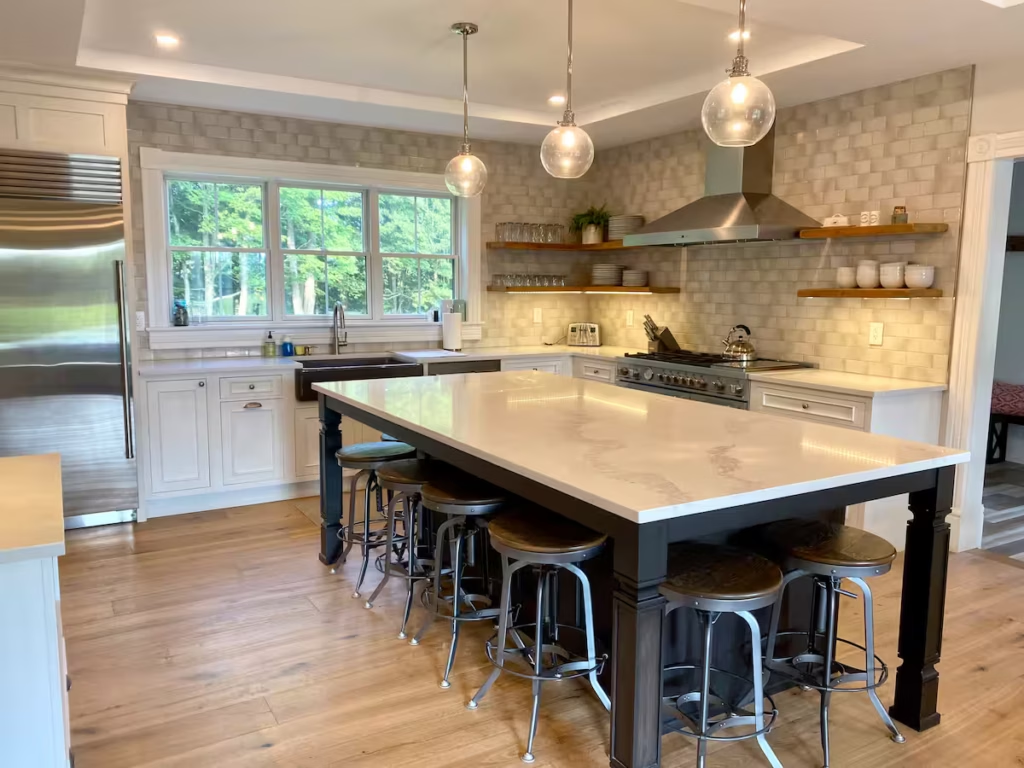
Choosing the Island Over an Eat-In Kitchen Table
We also made the decision not to include an eat-in kitchen table, which felt surprisingly controversial. And honestly? I would have loved to have one.
But with a finite footprint and several other priorities that mattered more, something had to give.
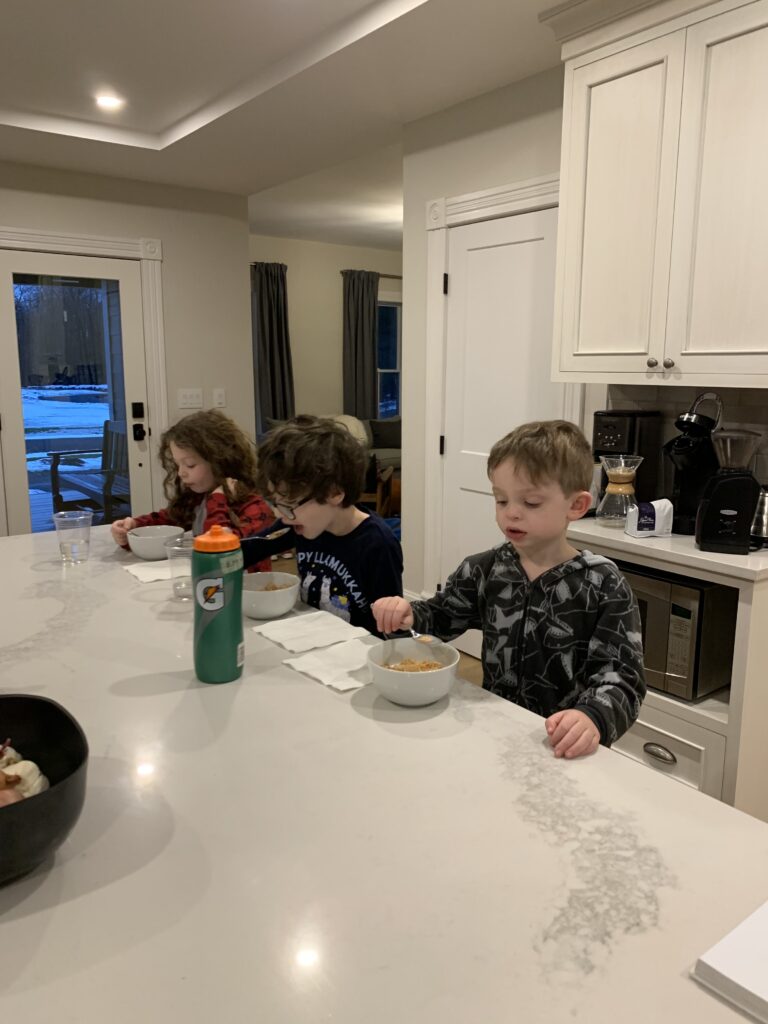
What ultimately sealed the deal was a weeklong trip we took during the design phase. We stayed in a beautiful home with an incredible kitchen—complete with an eat-in table just feet from the island. And yet, every single meal that week—breakfast, lunch, and dinner—we ate together as a family at the island.
That experience clarified everything. When given the choice, we naturally gravitated toward the island. So we leaned into that reality and let go of the table. It was a trade-off—but a conscious one. More on this later.
A Quick Look Ahead
This post lays the foundation for how and why we approached the kitchen design—but it’s only the beginning. Each of these decisions deserves more space, more nuance, and more honesty than fits here, so stay tuned for additional context and information in the coming weeks and months.
If you’re planning a renovation—or just love thinking through how homes actually work—I hope this series helps you feel more confident making choices that serve your life, not just the blueprint.

Next up: what living through construction with kids actually looks like. 😬 (Spoiler: it ain’t pretty.)
This post is part of my ongoing renovation series, Building a Well-Seasoned Home, where I’m sharing the process of reimagining our 120-year-old house for modern family life and real cooking. You can start from the beginning or follow along as we go — one decision at a time.

Let us know your thoughts!