


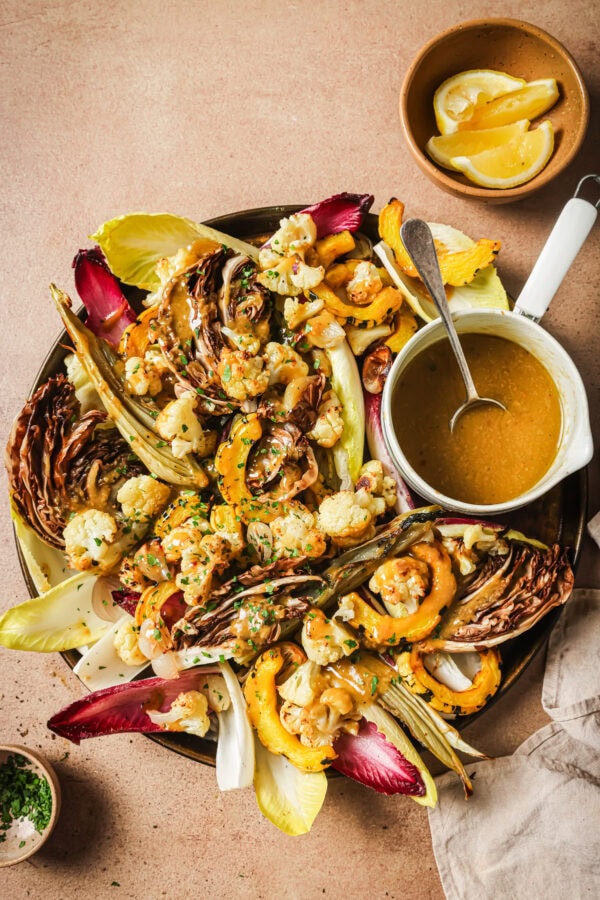
A Fall Veggie Platter Worth Building A Meal Around
This is the vegetable dish I want on the table from the first cold snap straight through Thanksgiving. It looks like something you’d order at a wine bar (or rather, a cicchetti bar in Italy, but it’s really just two sheet pans and one small saucepan — and almost all of the cooking happens while you’re doing something else.
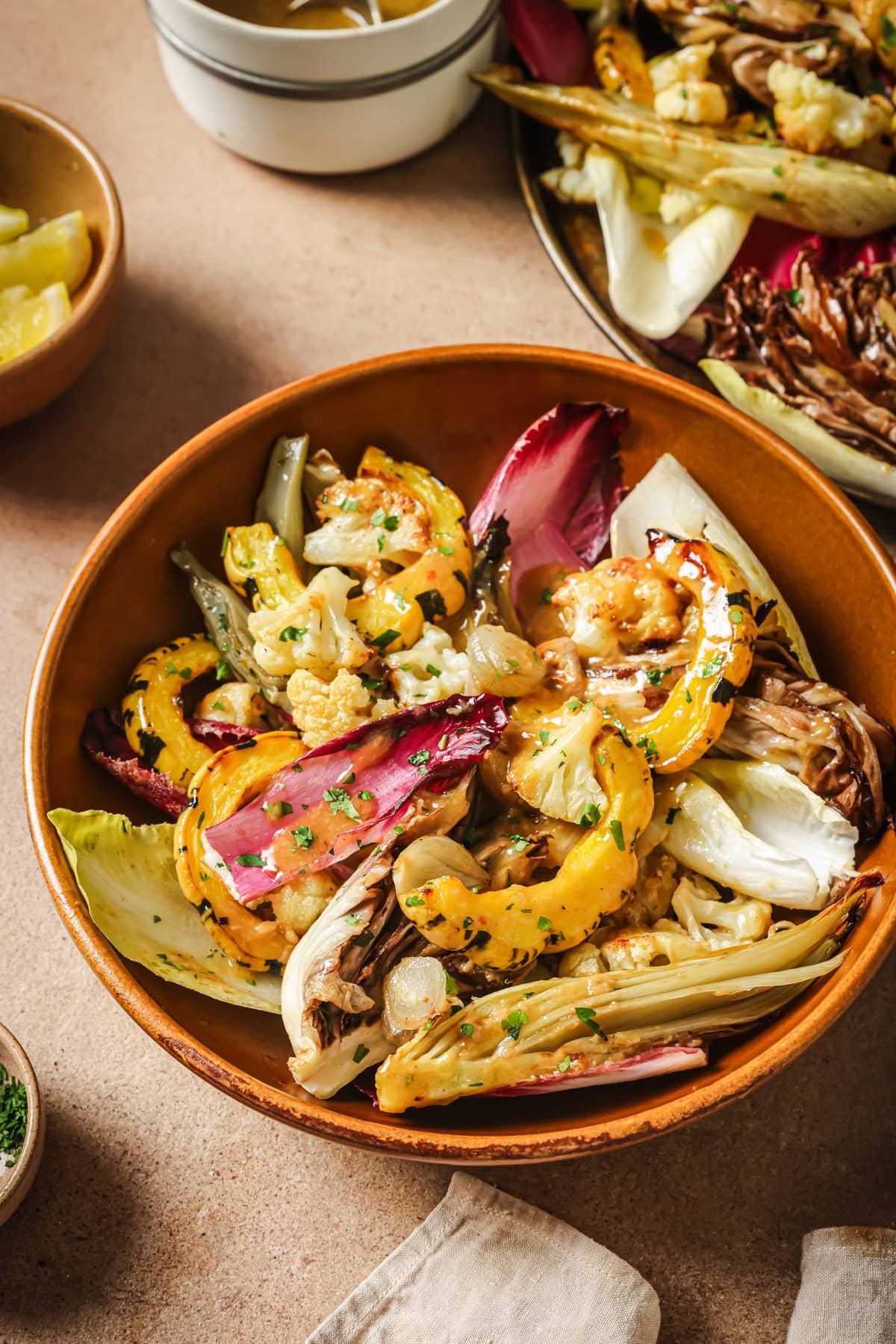
Here’s what you’ll get in every bite: squash with caramel-dark edges and a creamy center, cauliflower that’s nutty and golden where it touched the pan, fennel that loses its licorice bite and turns soft and sweet, and jammy little ciipollini onions that practically melt. Don’t skip the radicchio of endive, which add a slight bitterness and crunch, respectively. But the real winner here is the sauce: warm, glossy, deeply savory, with mellow sweet garlic. It’s the buttery finish that rounds out the whole plate.
Bagna Càuda Is Really Just A Garlic-Anchovy Butter Sauce
I first tried bagna càuda at an Italian restaurant in NYC, spooned over crispy roasted potatoes. Honestly, it blew my mind (and taste buds!). When I dug a little deeper, I found out that this northern Italian sauce is traditionally served with raw and cooked vegetables — mostly as a dip!
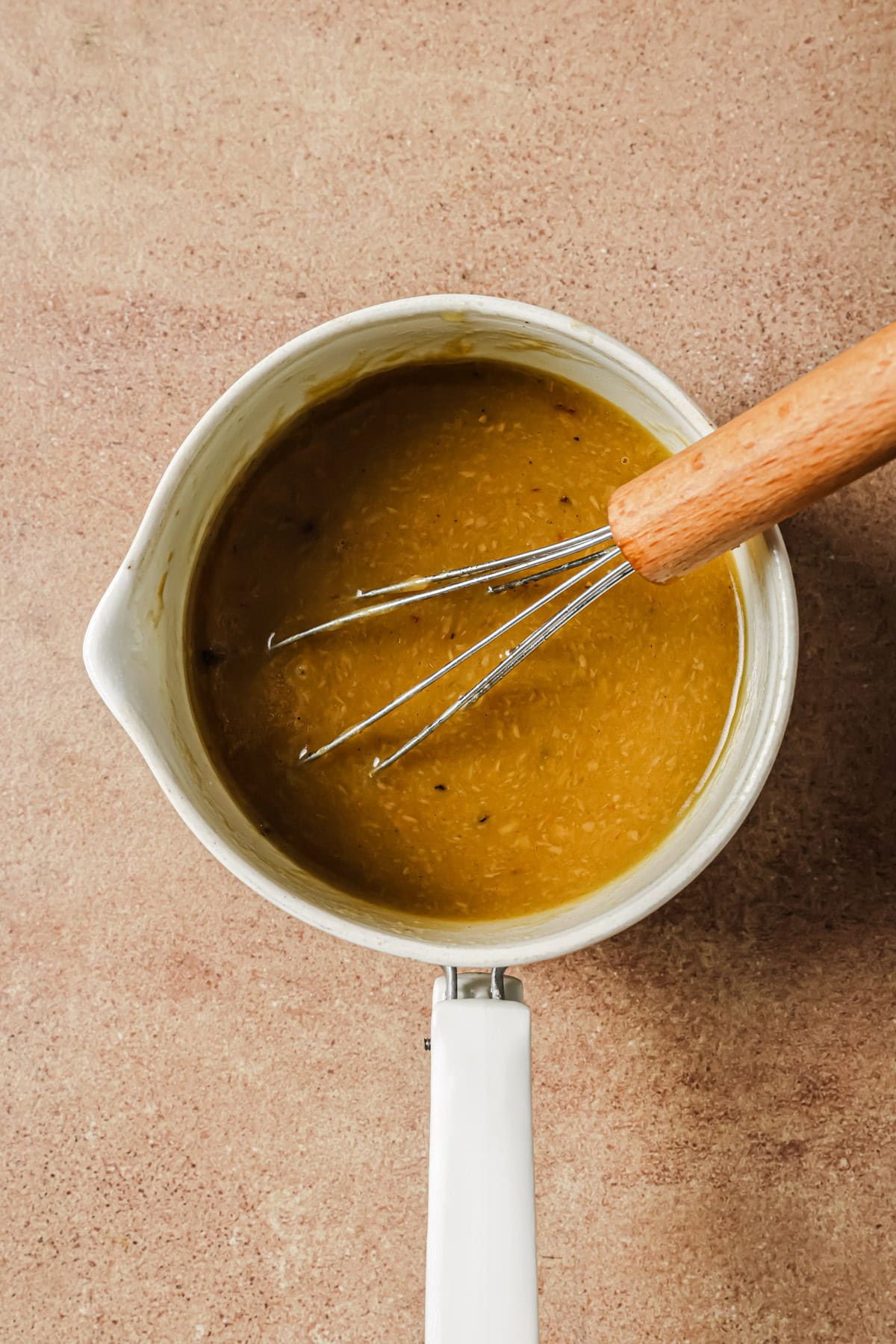
My version keeps the soul of the original but makes two small changes. First, the garlic is gently poached in milk before it goes into a sauce, a common Piedmontese trick I read about in one of my cookbooks. Second, I whisk in cold butter at the very end, which turns a loose, oily dip into something closer to a silky, spoonable sauce. Perfect for spooning over roasted autumn veggies (rather than dunking raw crudités).
“Will It Taste Fishy? (Short Answer: No)
When anchovies are melted slowly into warm oil, they dissolve completely and stop tasting like fish. The oil becomes deeply savory (it’s the same quality that makes a great Caesar dressing or puttanesca so craveable!).
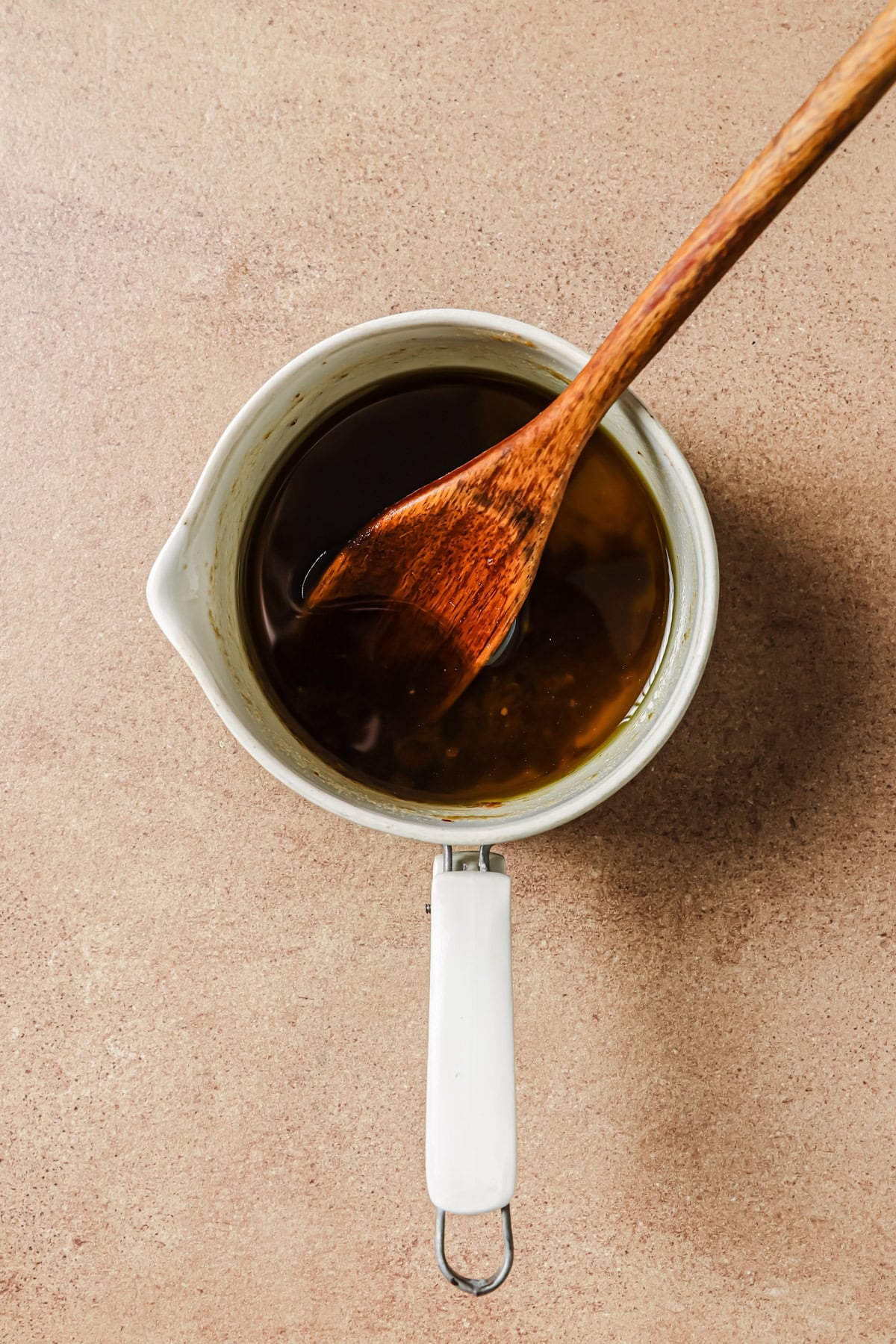
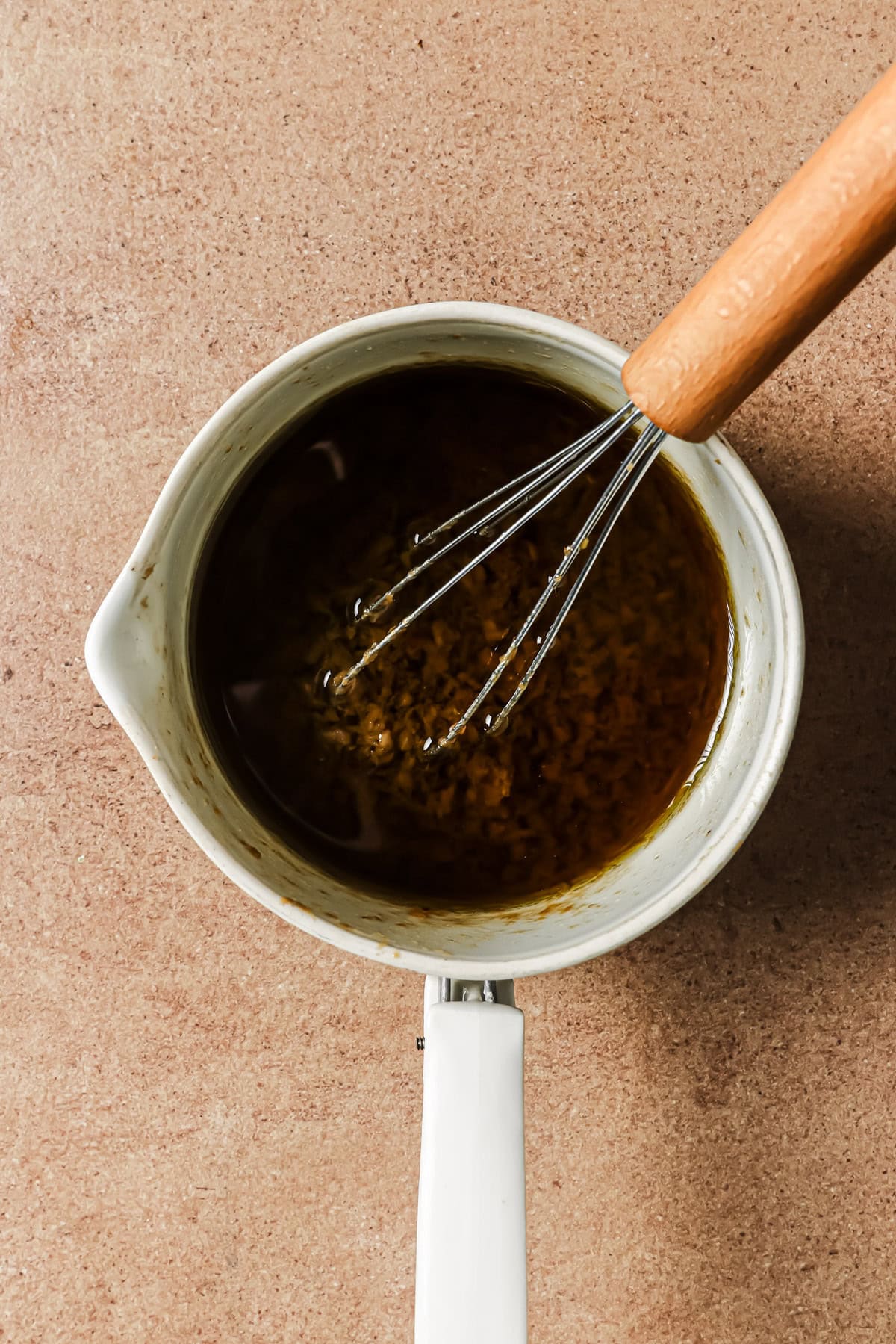
This turns the sauce creamy, glossy, and noticeably richer. It’s at its best right after the butter goes in, so wait to do this until ready to plate.
A few small tips that pay off with the veggies:
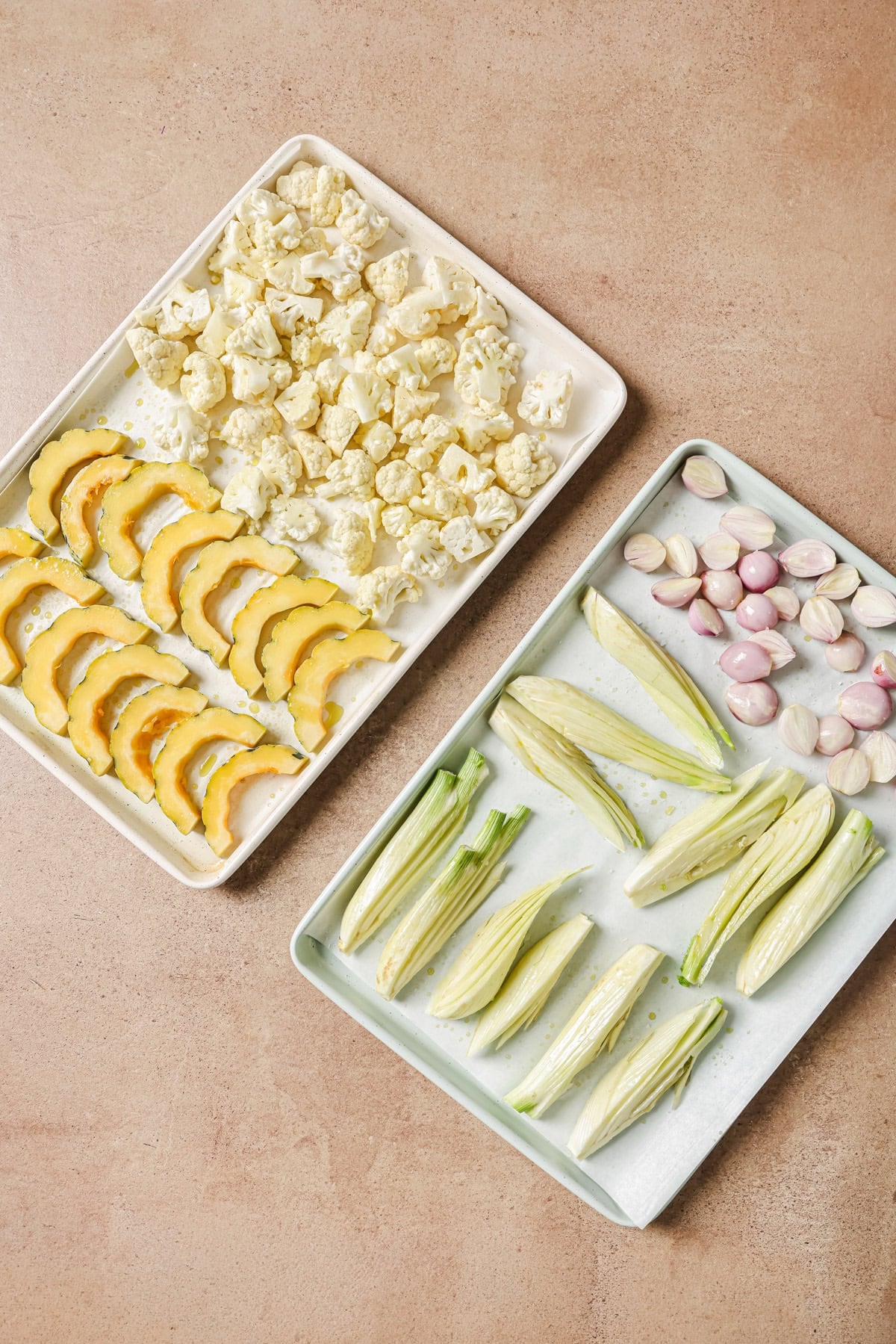
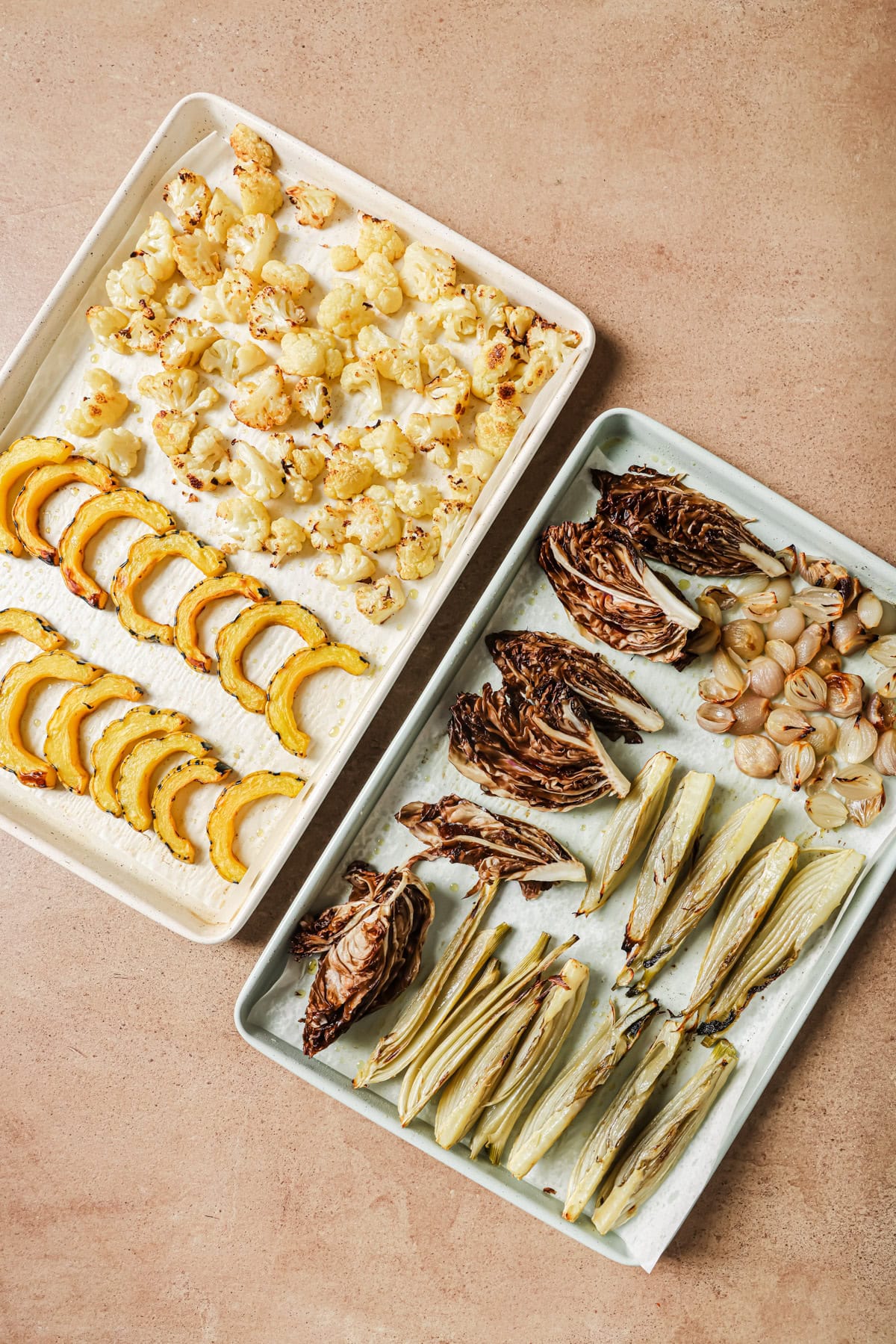
Honestly, the best thing you can do is make sure there’s space in between. The vegetables should be in a single layer with room between pieces, otherwise they’ll steam.
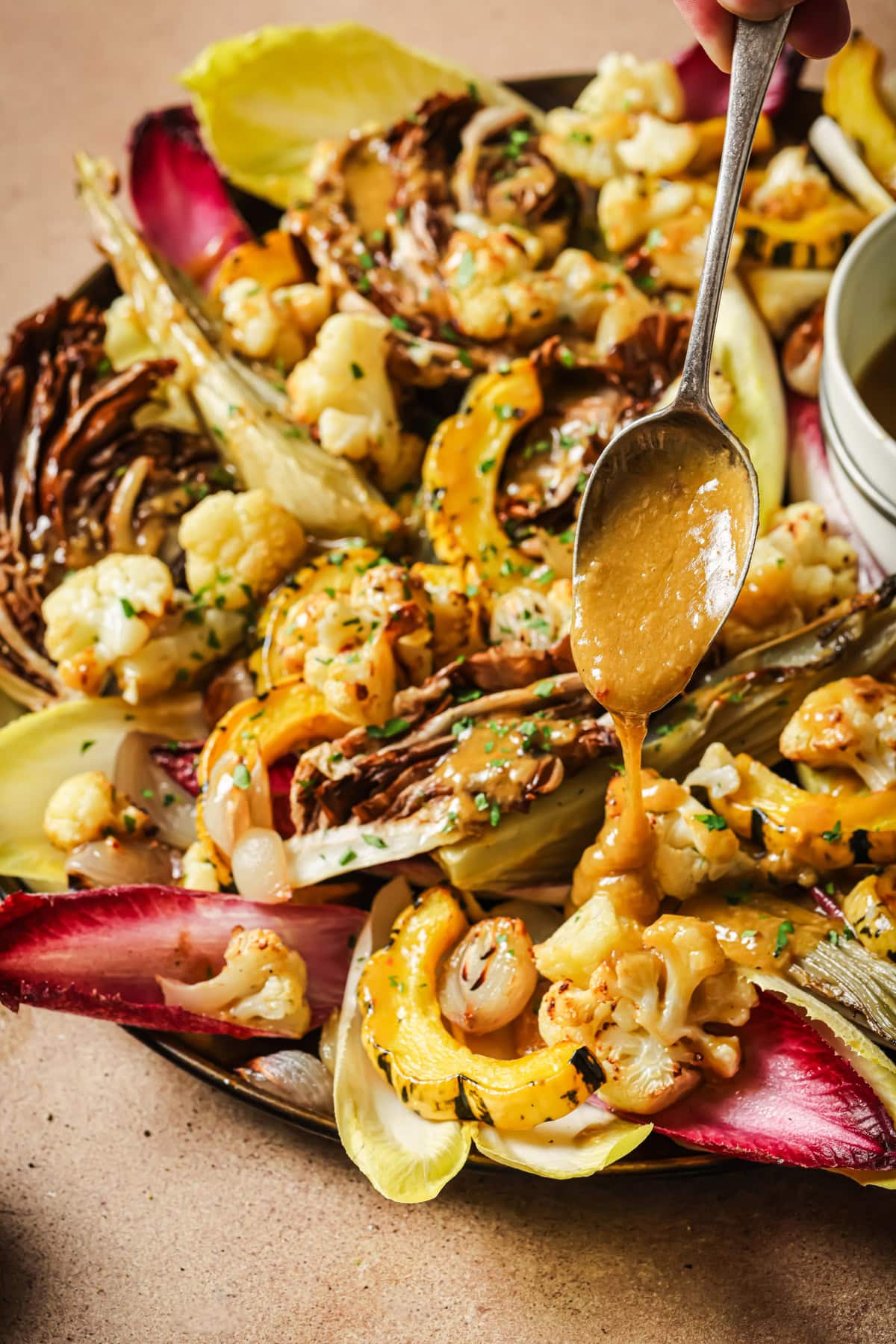
The endive stays raw. Tucked in at the end, it adds a cool, crunchy contrast to everything warm and soft. Beyond that, you can swap in any mix of your favorite vegetables! The only non-negotiable is anchovies — this wouldn’t be bagna càuda without them.
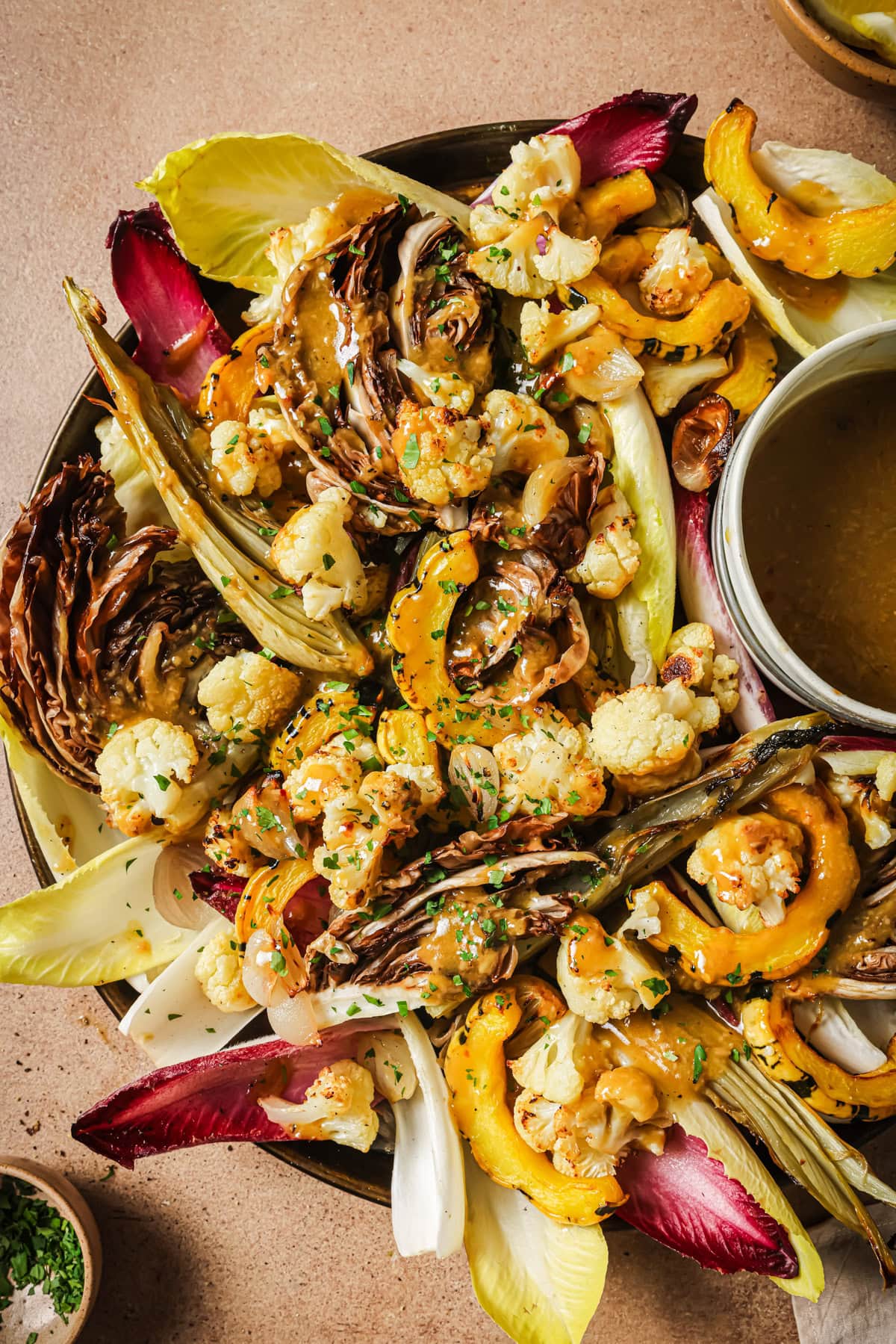
Family-Style Is The Pro Move
Pile everything onto one big platter, spoon most of the sauce over the top, then put the rest in a small bowl on the side for dipping and drizzling.
For Thanksgiving, this is the vegetable side that’ll cut through all the richness at the table. It’s especially good next to an ultra-crispy spatchcock turkey.
For a cozy dinner party, start with a tray of crisp Comté gougères, then serve alongside a juicy NY strip steak (anchovy and beef are a classic!), and finish with a make-ahead butterscotch budino with espresso caramel.
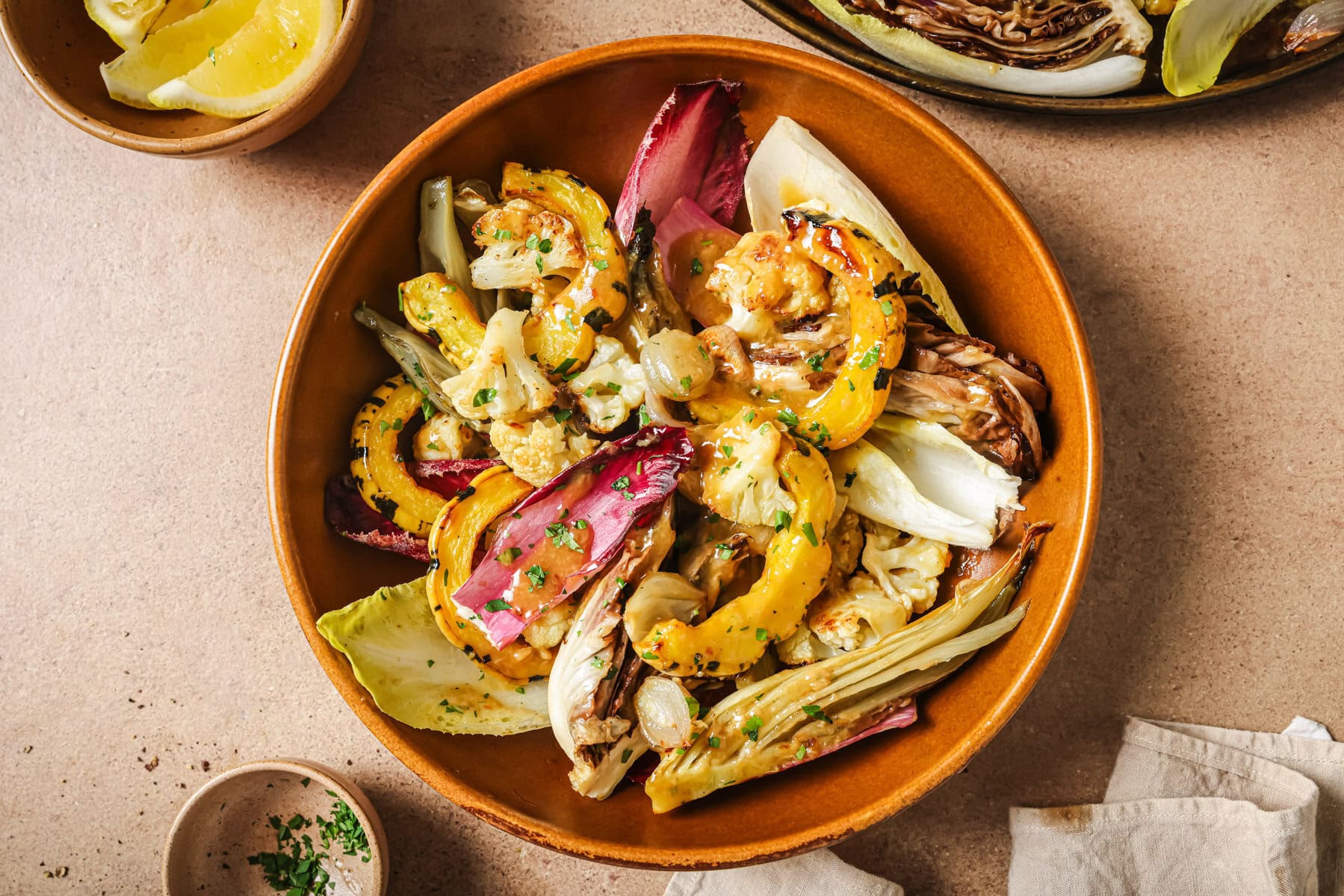
Fellow wine lovers, reach for a juicy Barbera or Dolcetto (sticking with Piedmont!). For my white wine friends, I’d grab a crisp Arneis.
Ideas For Using Up Leftover Bagna Cauda
Do not waste a single drop!! Toss it with hot pasta, spoon it over scrambled eggs, drizzle it on grilled bread, or spoon it lovingly over steak. My point is: it’s okay to get creative and it’s delicious on so many dishes.
If you make these roasted fall vegetables with bagna càuda at home, please let us know by leaving a review and ⭐️⭐️⭐️⭐️⭐️ rating below!
And make sure to sign up for our newsletter and follow along on Instagram, TikTok, YouTube, Pinterest, and Facebook for more Well Seasoned recipes! Don’t forget to tag us on social channels when you make a recipe at #wellseasonedstudio and upload your photos below! We love seeing what you’re up to in the kitchen!
Tell Us What You Think!
If you make this recipe, don’t forget to leave a review and rating—we value your feedback and it helps us keep creating (and sharing!) free recipes. Your support means the world!
Rate this Recipe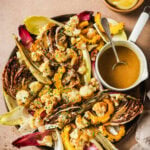
Roasted Fall Vegetables with Bagna Càuda (Warm Italian Garlic Sauce)
Equipment
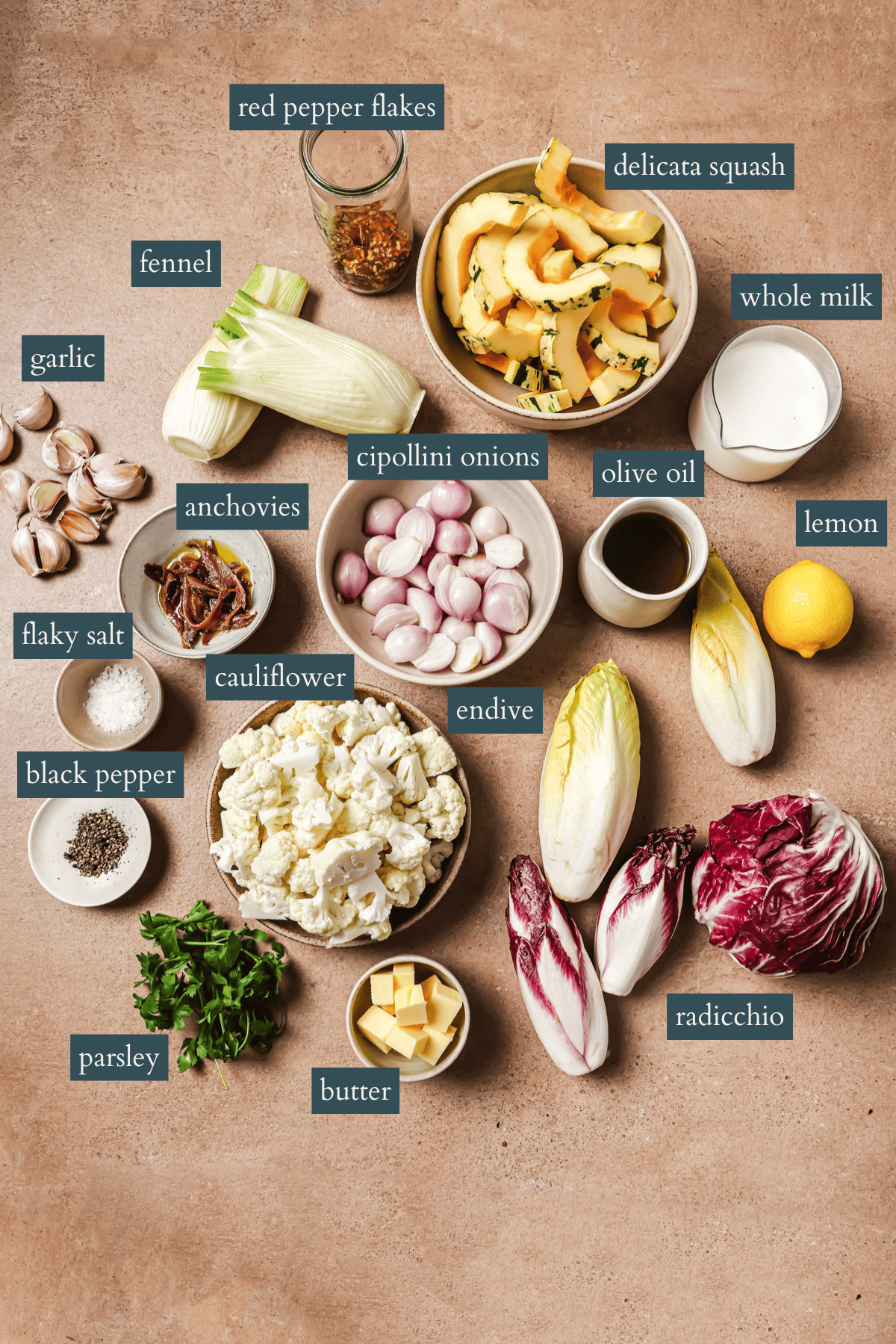
Ingredients
For the Bagna Càuda
- 12 cloves of garlic peeled
- 1 cup (240ml) whole milk, for poaching
- ¾ cup (180ml) good extra-virgin olive oil
- 2 oz (55g) oil-packed anchovy filets, about 12-14, drained
- ¼ tsp crushed red pepper flakes
- 4 Tbsp (57g) cold unsalted butter, cubed
- Freshly ground black pepper
For the Vegetables
- 1 lb (450g) delicata squash, halved, seeded, cut into ½-inch (1.3cm) half moons (no need to peel)
- 1 medium head (about 1½ lb / 680g) cauliflower cut into 1-inch (2.5cm) pieces
- 2 medium (about 1 lb / 450g) fennel bulbs cut into ¾-inch (2cm) wedges through the root
- 8 oz (225g) cipollini onions, peeled and halved
- 1 small head (about 8oz / 225g) radicchio cut into 6 wedges through the core
- 1 head Belgian endive, separated into spears
- 3 Tbsp (45ml) extra-virgin olive oil
- 1 tsp Diamond Crystal kosher salt
To Finish
- Fresh parsley, roughly chopped
- Flaky sea salt
- Lemon wedges
Instructions
- Preheat the oven to 425°F (220°C), with racks in the upper and lower thirds. Line two rimmed sheet pans with parchment.
- Roast in two groups. Toss the squash and cauliflower with half the oil and salt on one pan; toss the fennel and cipollini onions with the remaining olive oil and salt on the other. Spread everything in a single layer with space between pieces (crowded vegetables steam and never brown).
- Roast. Roast for 30 minutes, rotating the pans and swapping racks halfway through, until everything is deeply caramelized at the edges and tender through. At the 30-minute mark, nestle the radicchio wedges onto one of the sheet pans, turning them in whatever oil has collected. Return to the oven and roast for 8-10 minutes more. Make the sauce while they roast.
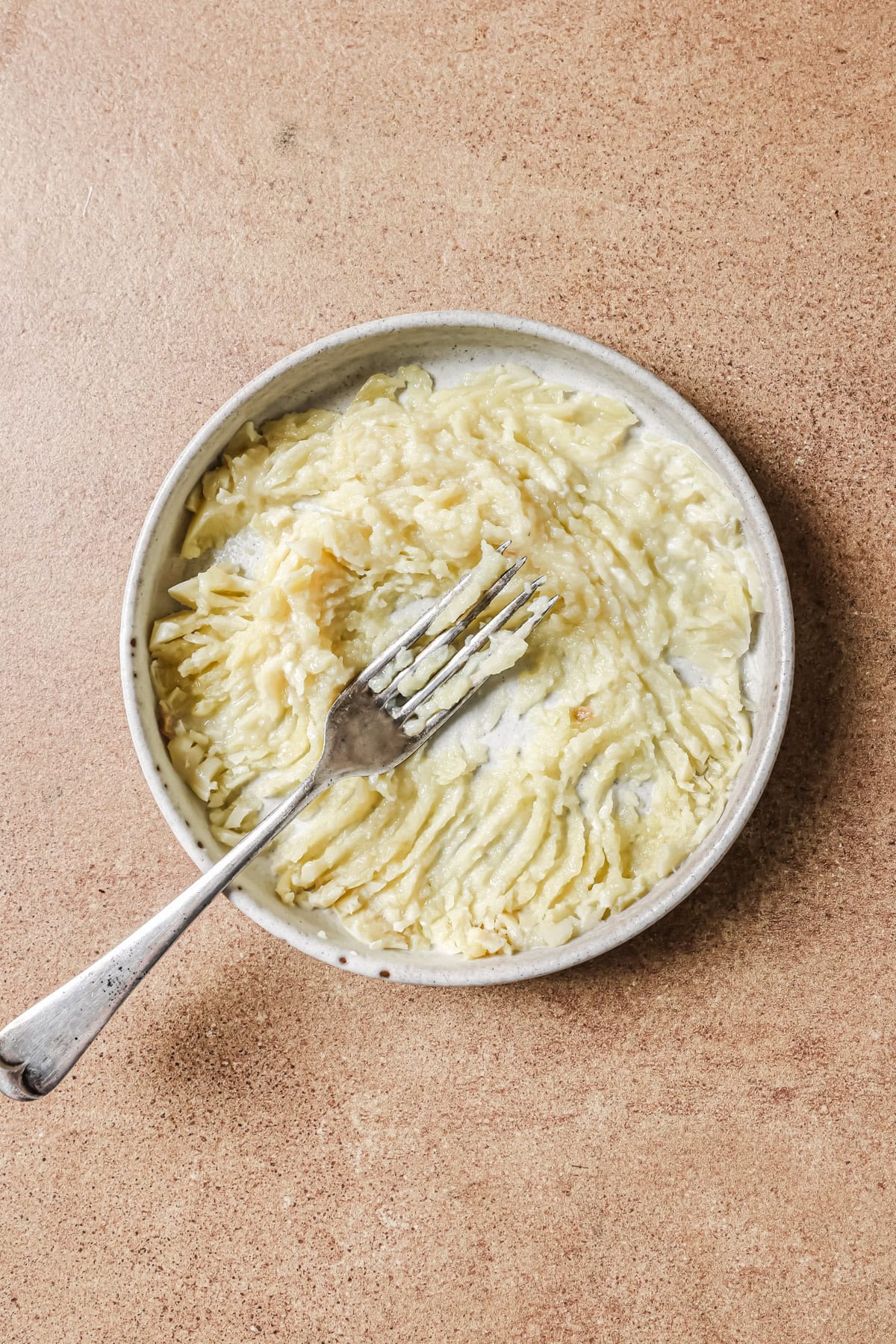
- Poach the garlic. Combine 12 peeled garlic cloves and 1 cup (240ml) milk in a small saucepan. Bring to a gentle simmer over medium-low heat, then reduce and cook until the garlic has softened, about 15-20 minutes. Drain and discard the milk. Mash the cloves to a smooth paste with a fork.
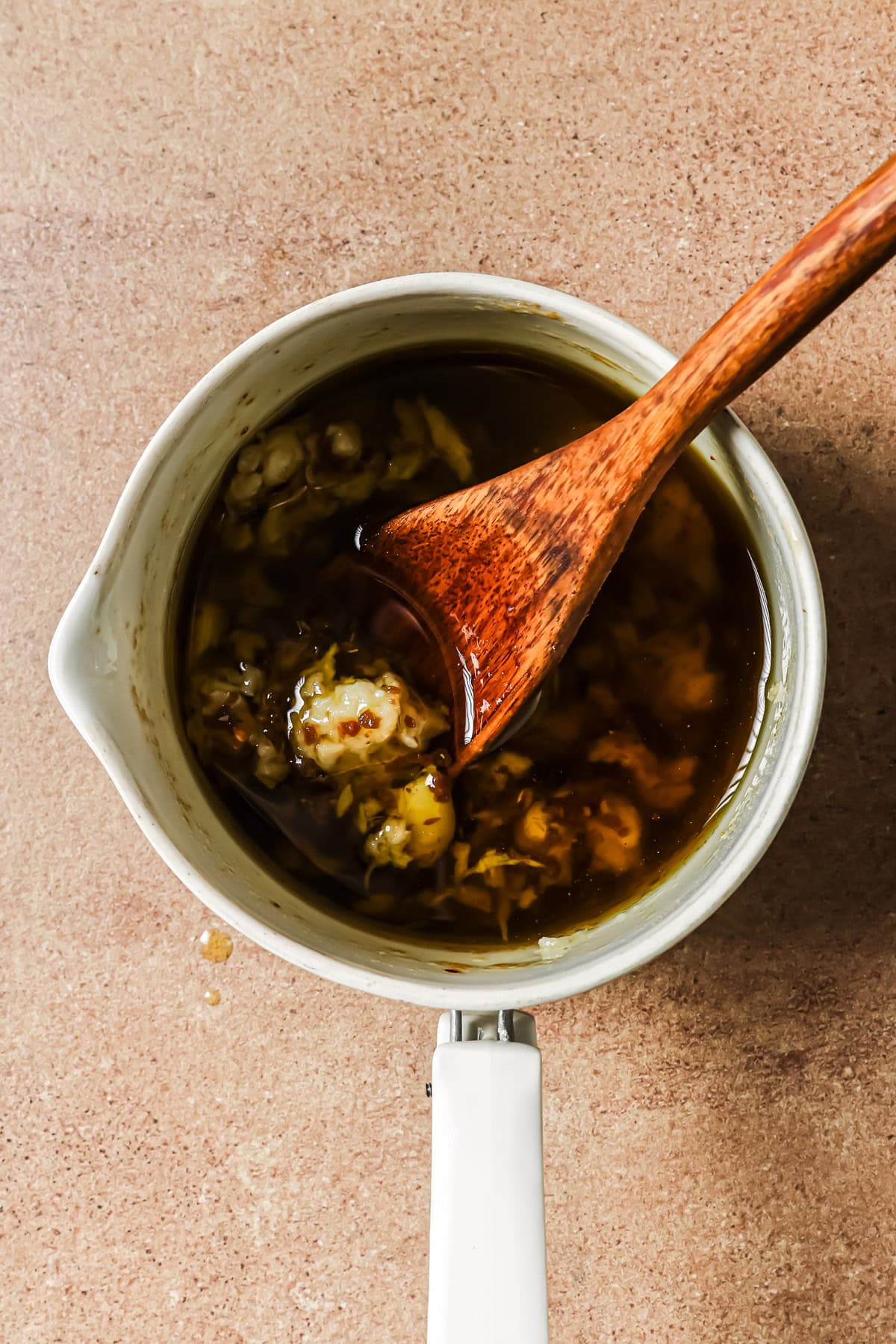
- Melt the anchovies. Warm ¾ cup (180ml) olive oil in a small saucepan over low heat. Add the anchovies and ¼ tsp pepper flakes and cook, stirring and pressing with a wooden spoon, until the fillets dissolve completely into the oil, 5-8 minutes. Keep the heat genuinely low — anchovies that fry rather than melt turn harsh and fishy instead of savory.
- Add garlic. Stir in the mashed garlic paste and cook on the lowest heat, stirring occasionally, for about 10 minutes. The sauce should never bubble more than the occasional lazy blip. Pull the pan off the heat and hold it there — do not add the butter until the veggies are done.
- Finish with butter. If needed, you can rewarm the sauce slightly. I’ve tried to time everything so that’s unnecessary. Whisk the cold butter into the warm sauce, one cube at a time, waiting until each is fully absorbed before moving on. Season to taste with black pepper.
- Assemble. Arrange all the roasted veggies on a large platter, tucking the raw endive spears in among them. Spoon about ⅔ of the warm bagna càuda over the platter, scatter with parsley and flaky sea salt, and put the remaining sauce in a small bowl alongside with lemon wedges. Serve immediately, as the sauce is as its best after the butter goes in. Enjoy!
Notes
- Anchovies matter most. Use good oil-packed filets. Salt-packed are the pro move: meatier, cleaner, and less salty. Rinse well under cold water, split along the backbone, and remove the spine and fins. Worth it if you have them, not worth a special trip.
- Make-ahead: Make the sauce through step 6 up to 3 days ahead and refrigerate. Rewarm over the lowest heat, then whisk in the butter. Vegetables (except radicchio and endive) can be cut 1 day ahead.
- Storage: Leftover veggies and sauce keep for 3-4 days, refrigerated separately. Not recommended for freezing.
Photography by Jo Harding.


Let us know your thoughts!