


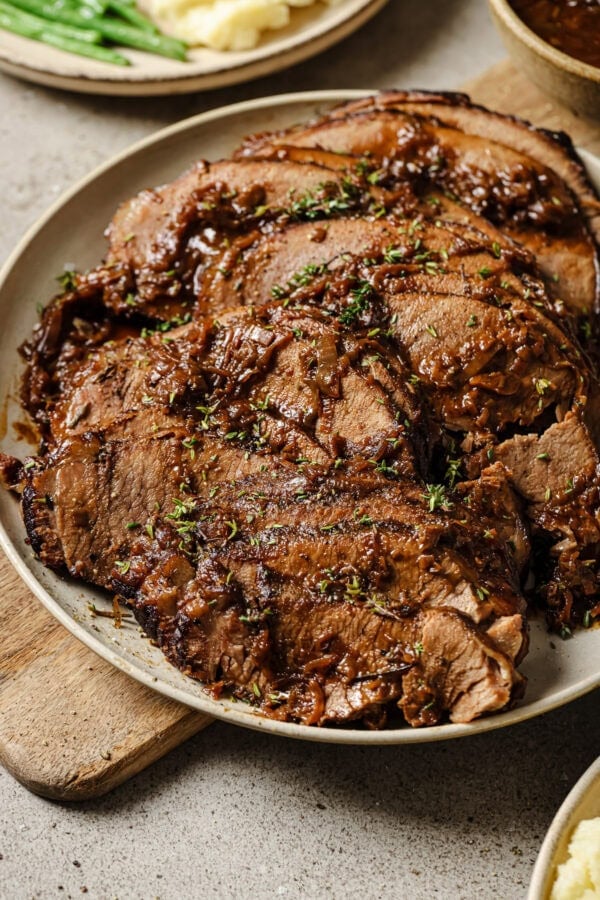
My Family’s Melt-In-Your-Mouth Jewish-Style Brisket
If you grew up eating Jewish brisket, you’ll recognize the soul of this dish: slow braising, sweet onions, and a glossy, deeply flavored gravy. But here, the addition of leeks and fresh herbs gives it a slightly more refined, French-inspired feel. Which, if you’ve been here a while, you know is very much my thing. 😉 The best part? The mixture of onions, leeks, and shallots cook down and collapse into the most luscious sauce.
This fall-apart brisket is elegant enough for a holiday table (in fact, it’s what I often serve at Rosh Hashanah or Hanukkah), but simple enough for a cozy Sunday dinner. I’ve been making this my whole adult life and I cannot wait for you to share it with your family!
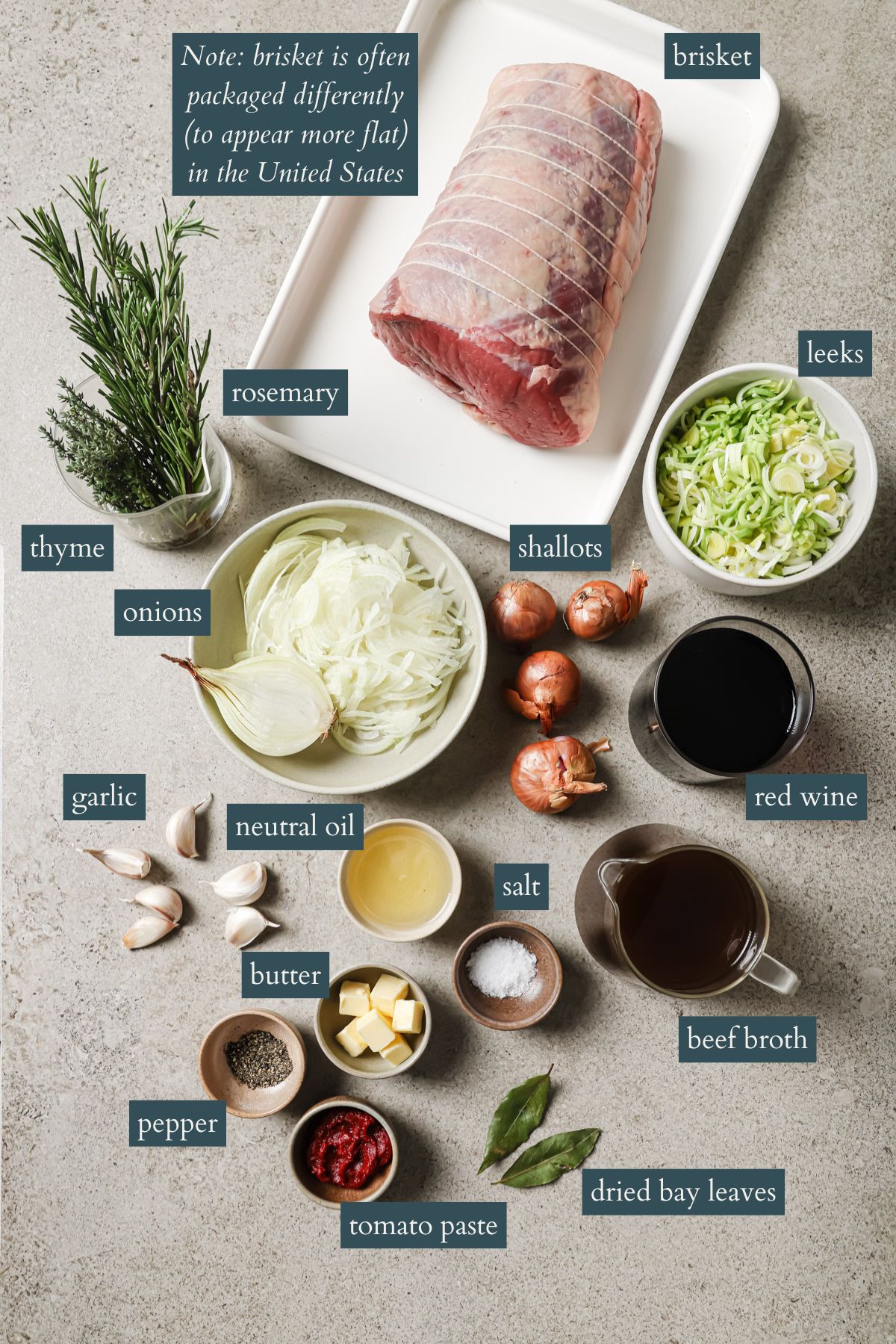
Quick Note On Buying Brisket
A whole brisket (8–12 lb) is typically divided into the first cut (flat) and the second cut (point). The flat is leaner and slices neatly; the point is thicker, more marbled, and far juicier. For the most tender, flavorful results, choose the second cut and leave the fat intact to keep the meat moist as it braises.
How To Make Slow-Cooked Brisket
This ain’t your typical smoked brisket you’d find at a barbecue joint. If I had to describe Jewish brisket to someone who’s never tried it before, I’d focus on its juicy, deeply beefy flavor with edges that practically melt on your tongue. AKA: pure comfort food!
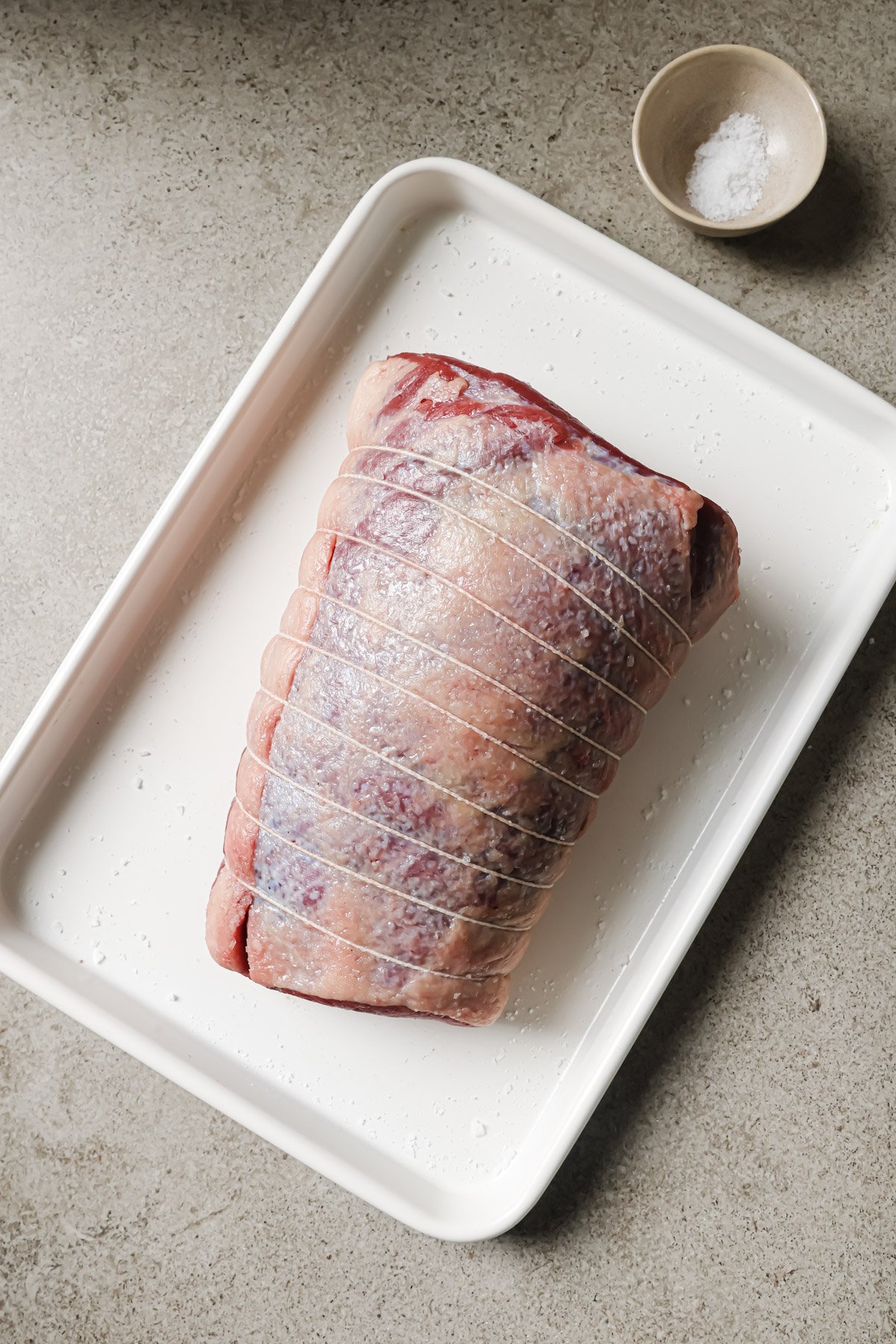
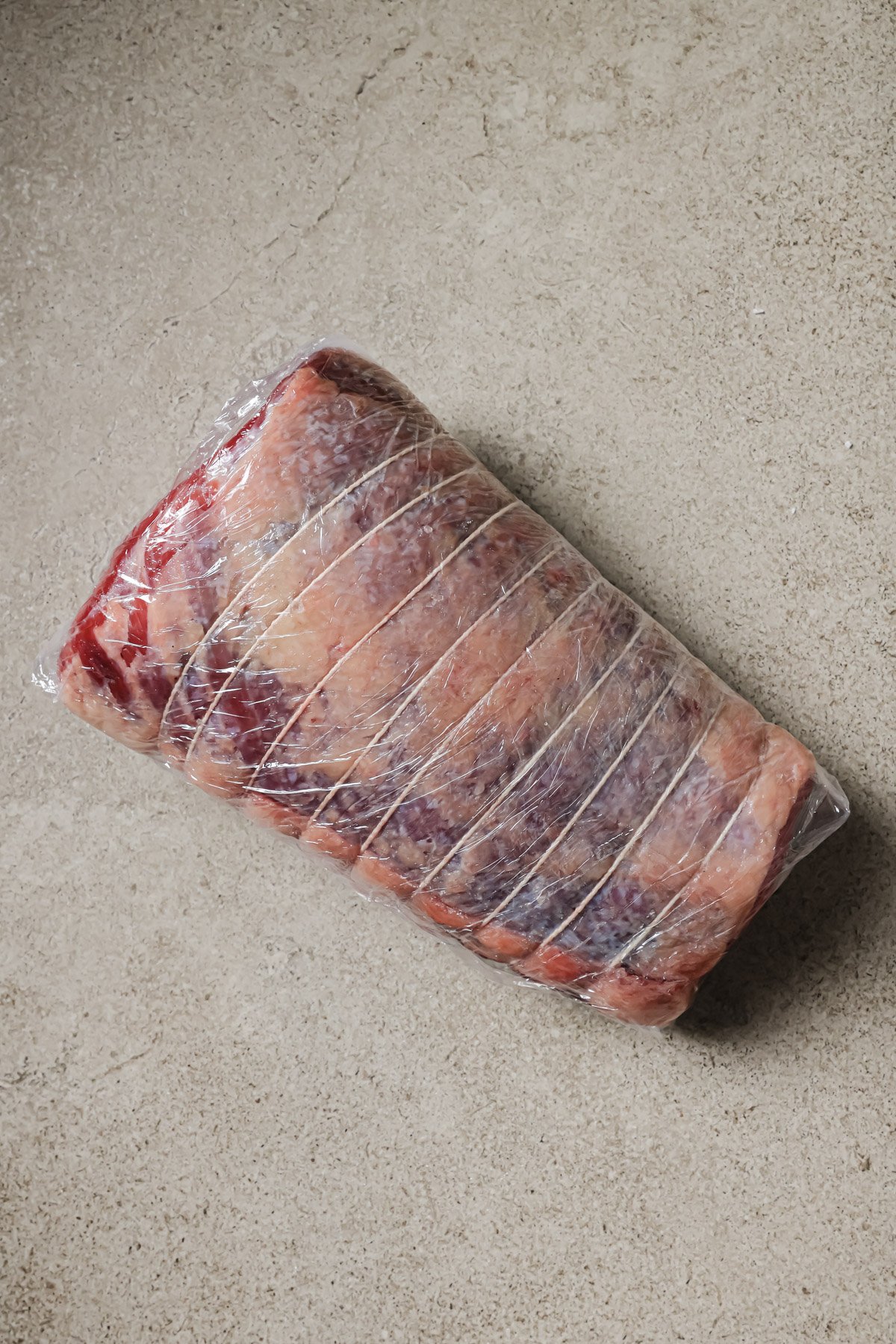
This acts as a dry brine, seasoning the meat more thoroughly and helping it retain moisture during cooking. That said—if you forget or are short on time? It will still be delicious. No need to rinse off the salt before cooking.
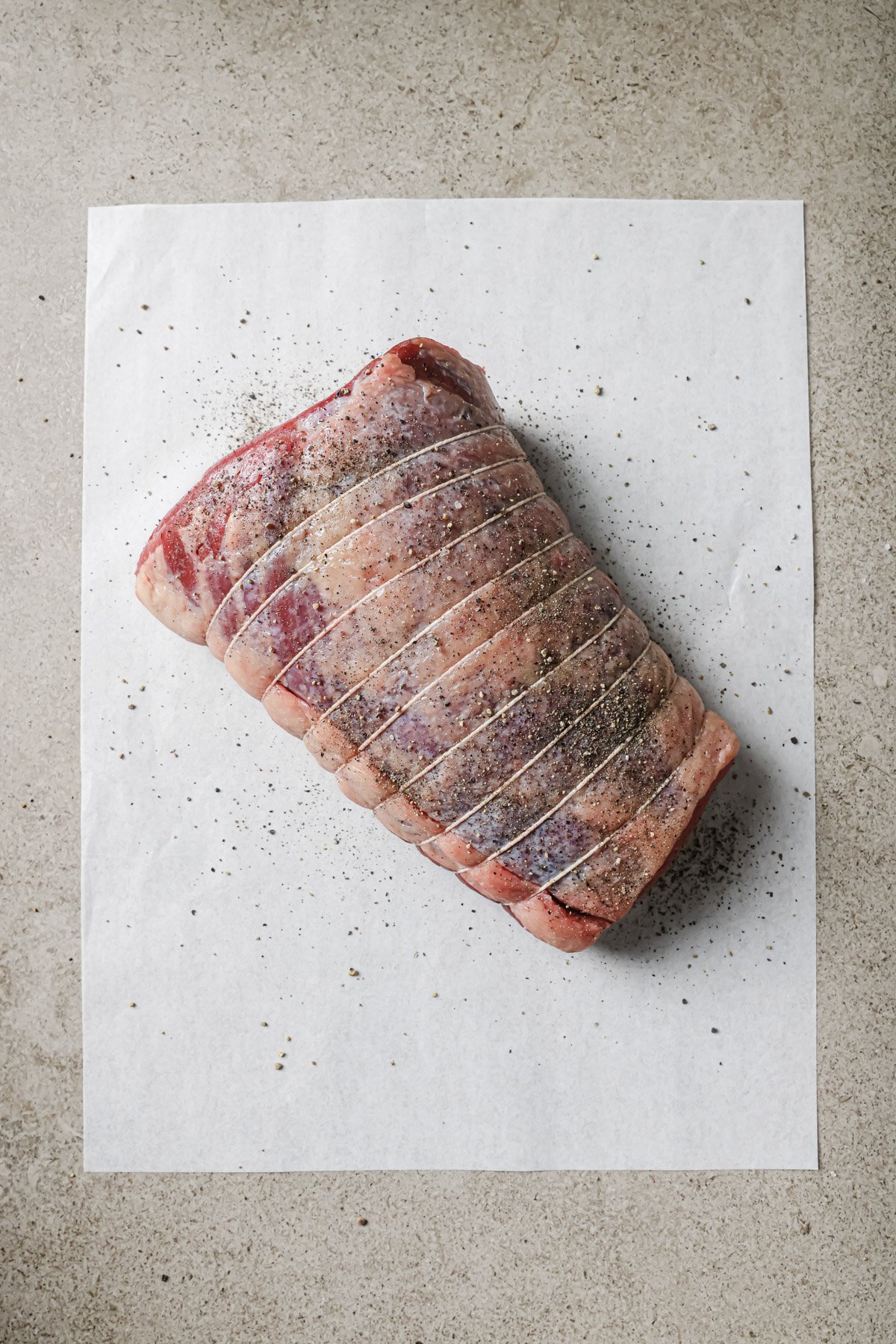
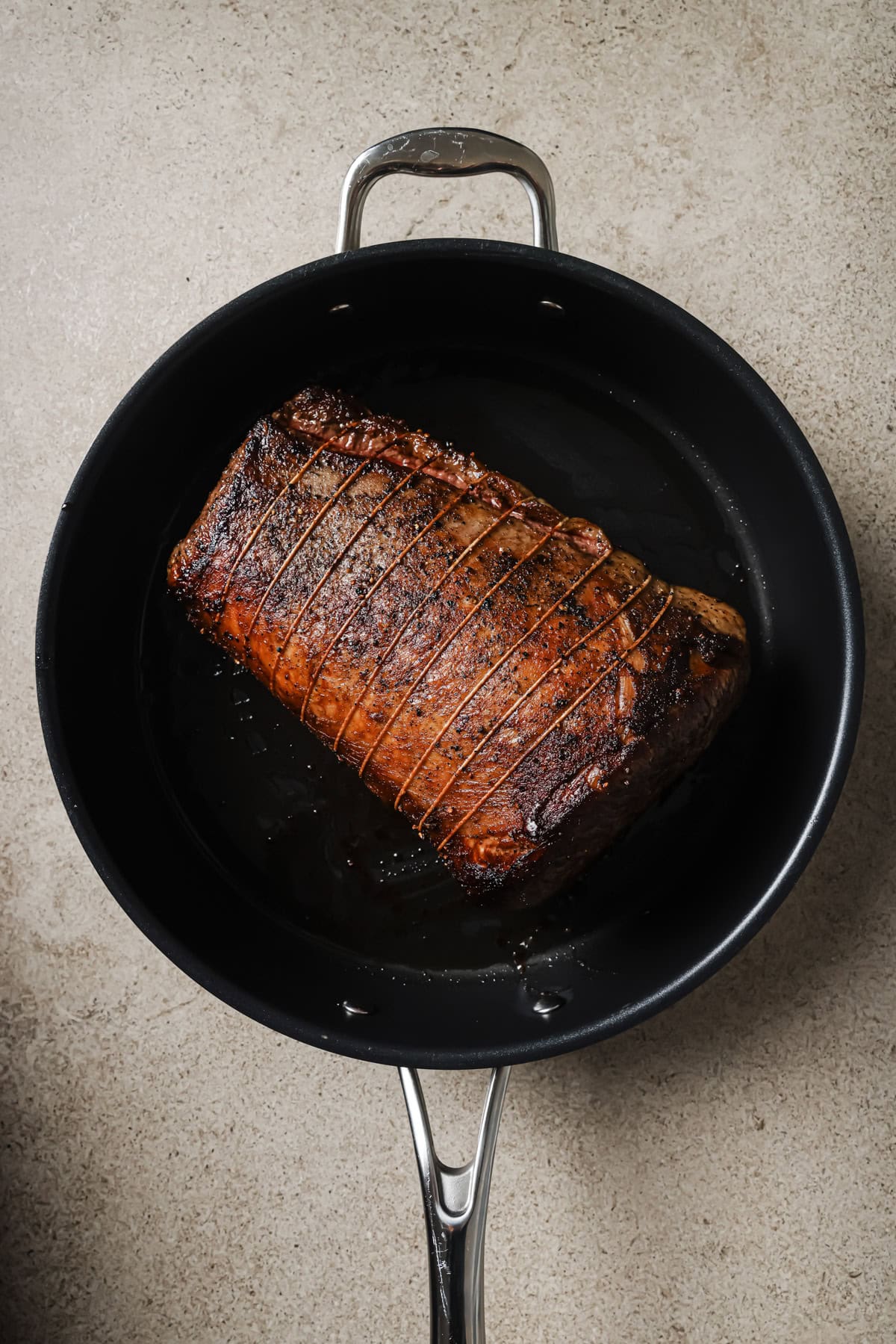
Don’t rush this step! That deep golden crust = flavor. Those browned bits left in the pot? Also flavor. Don’t drain them!
Transfer the beef brisket to a plate, then reduce the heat.
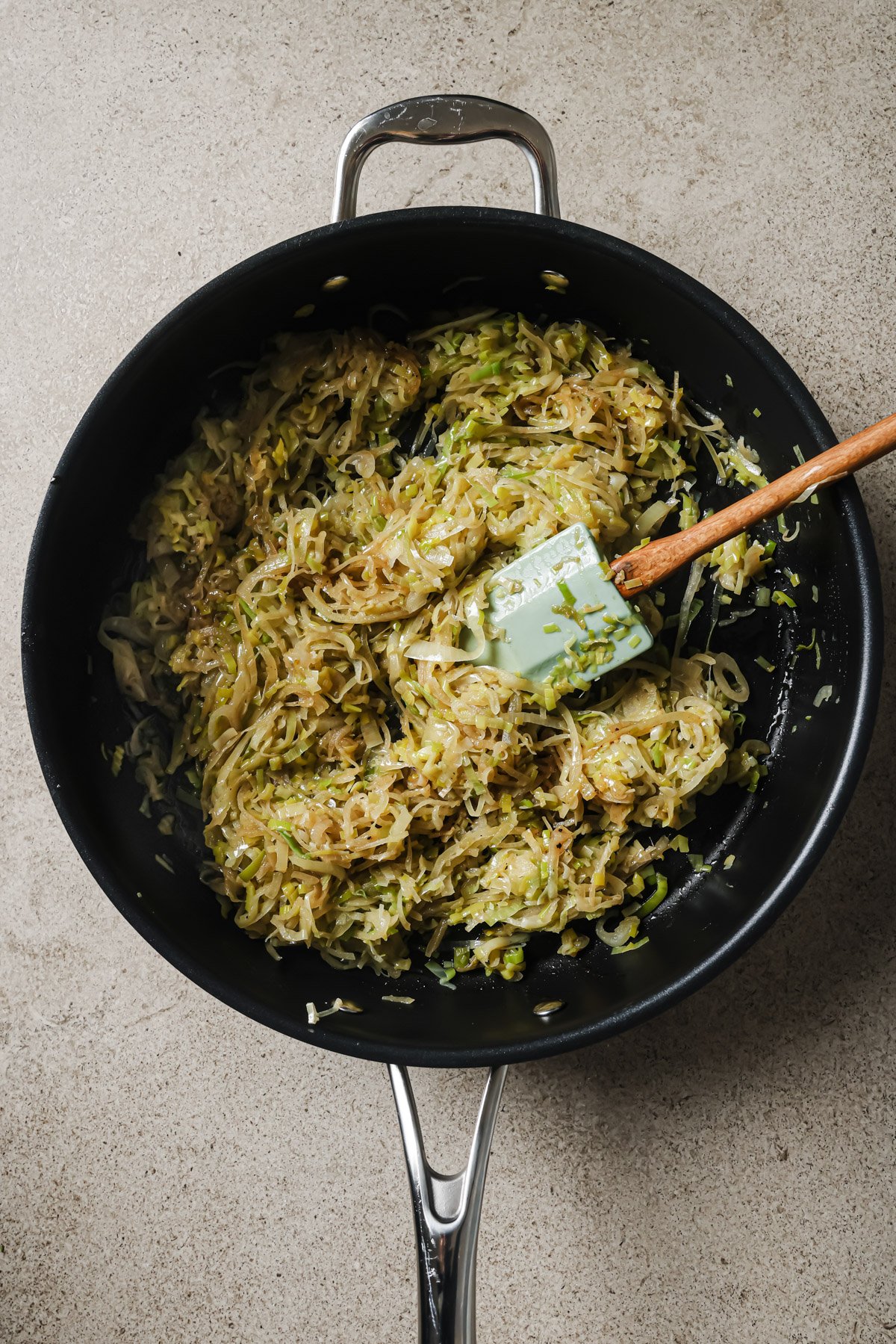
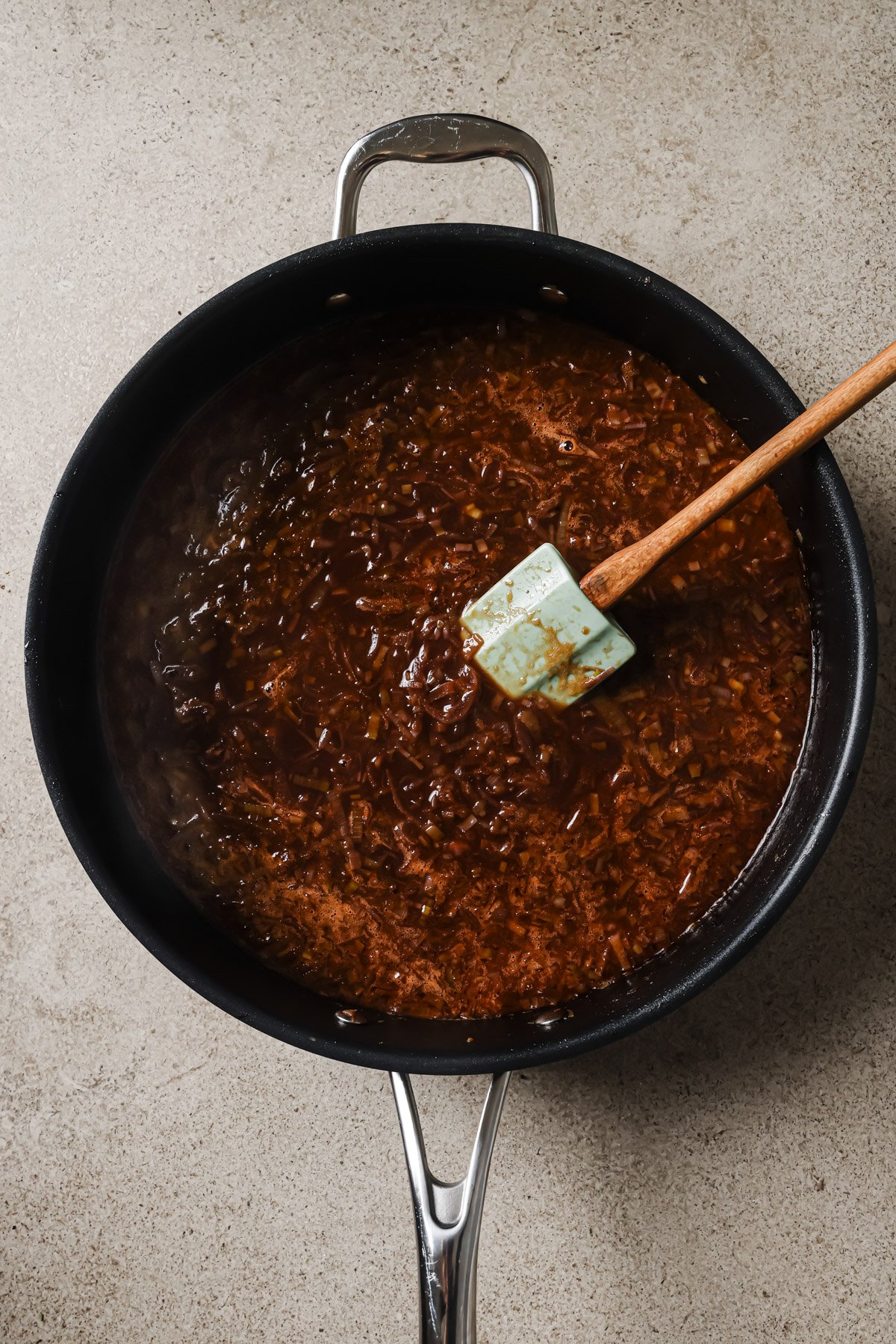
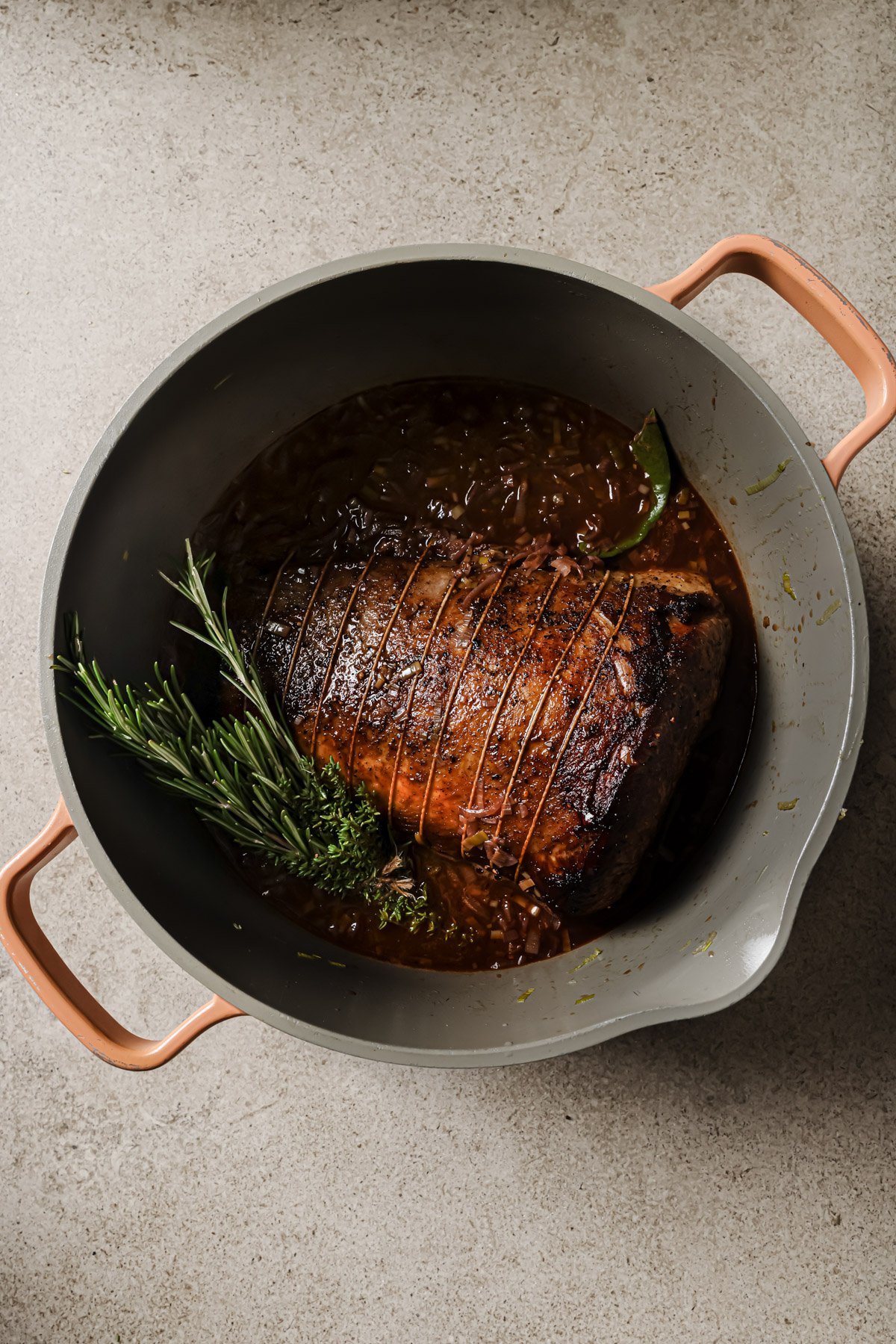
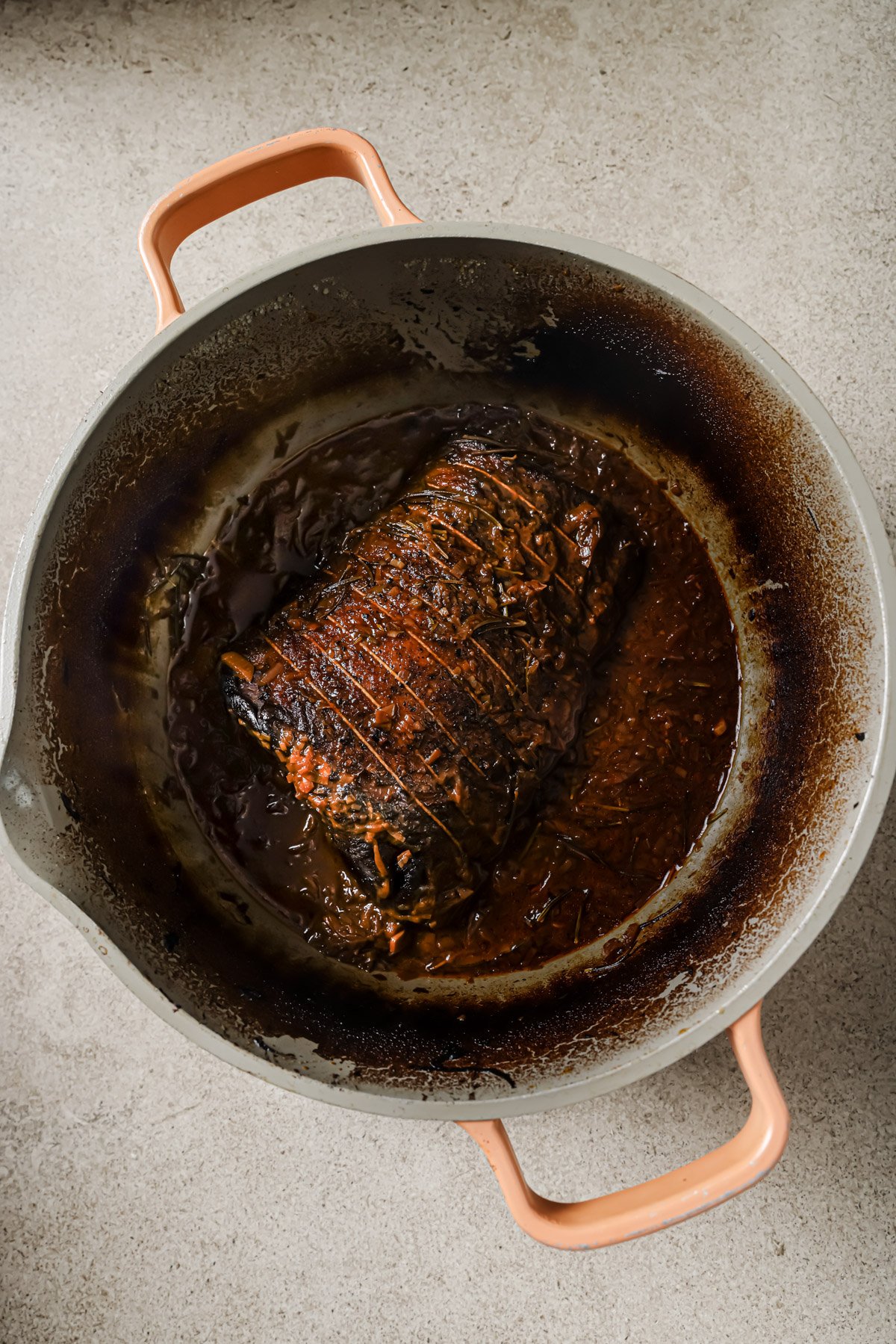
You’ll know it’s ready when the brisket is fork-tender and pierces easily. The onions and leeks will have completely softened into the braising liquid, creating a rich, spoonable sauce.
Rest Before Slicing!
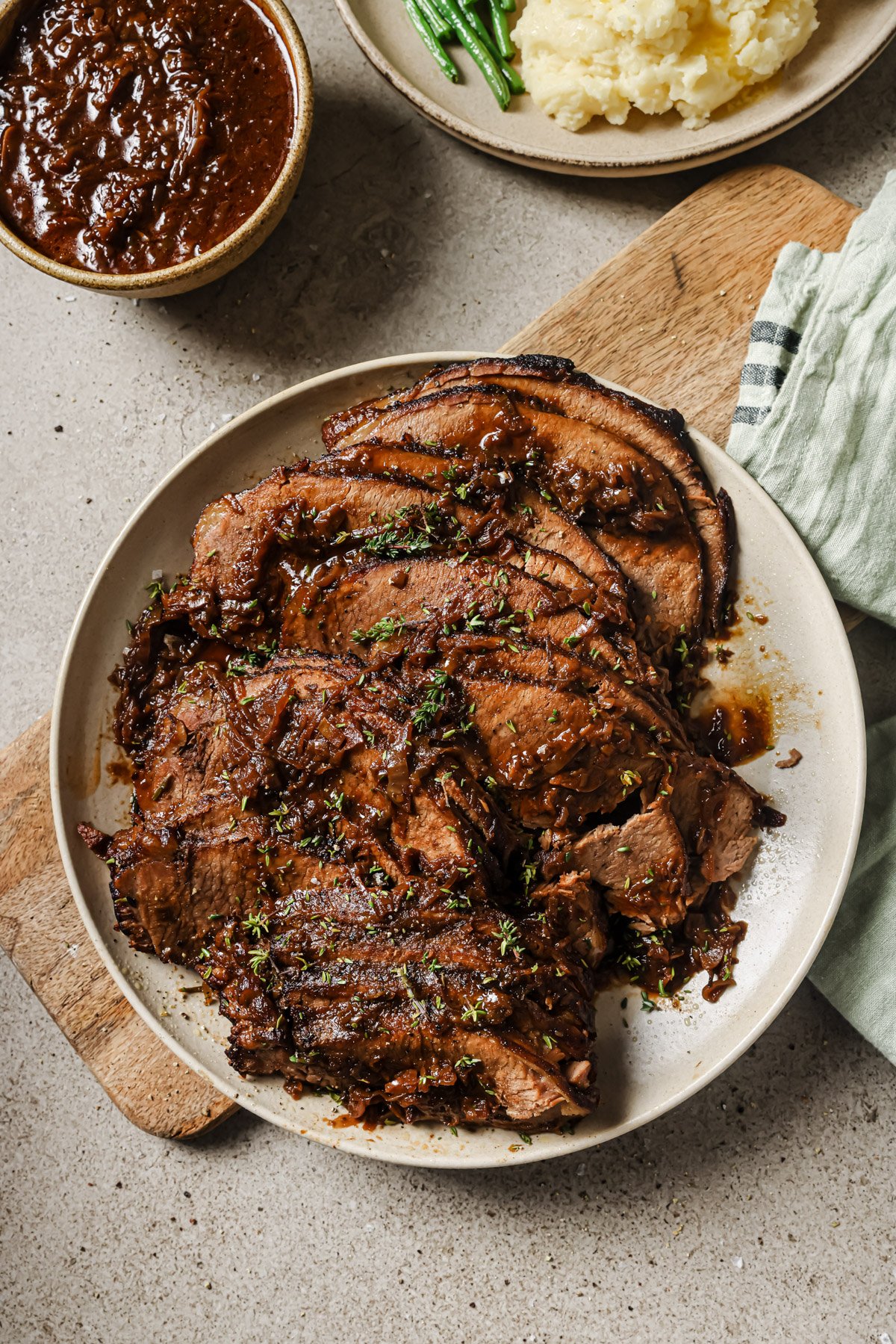
Be sure to let the brisket cool slightly before slicing. This is key.
For clean slices, cut across the grain (perpendicular to the muscle fibers) into ¼-½ inch slices. This shortens the muscle fibers and ensures tenderness. (Also, this is why we cook brisket for so long: it gives the connective tissues a chance to break down becoming utterly tender.)
It’s also really easy to adapt the cooking for a slow-cooker. After searing and sautéing the vegetables, transfer everything to a slow cooker and cook on low for 8-10 hours until tender.
Serving Recommendations
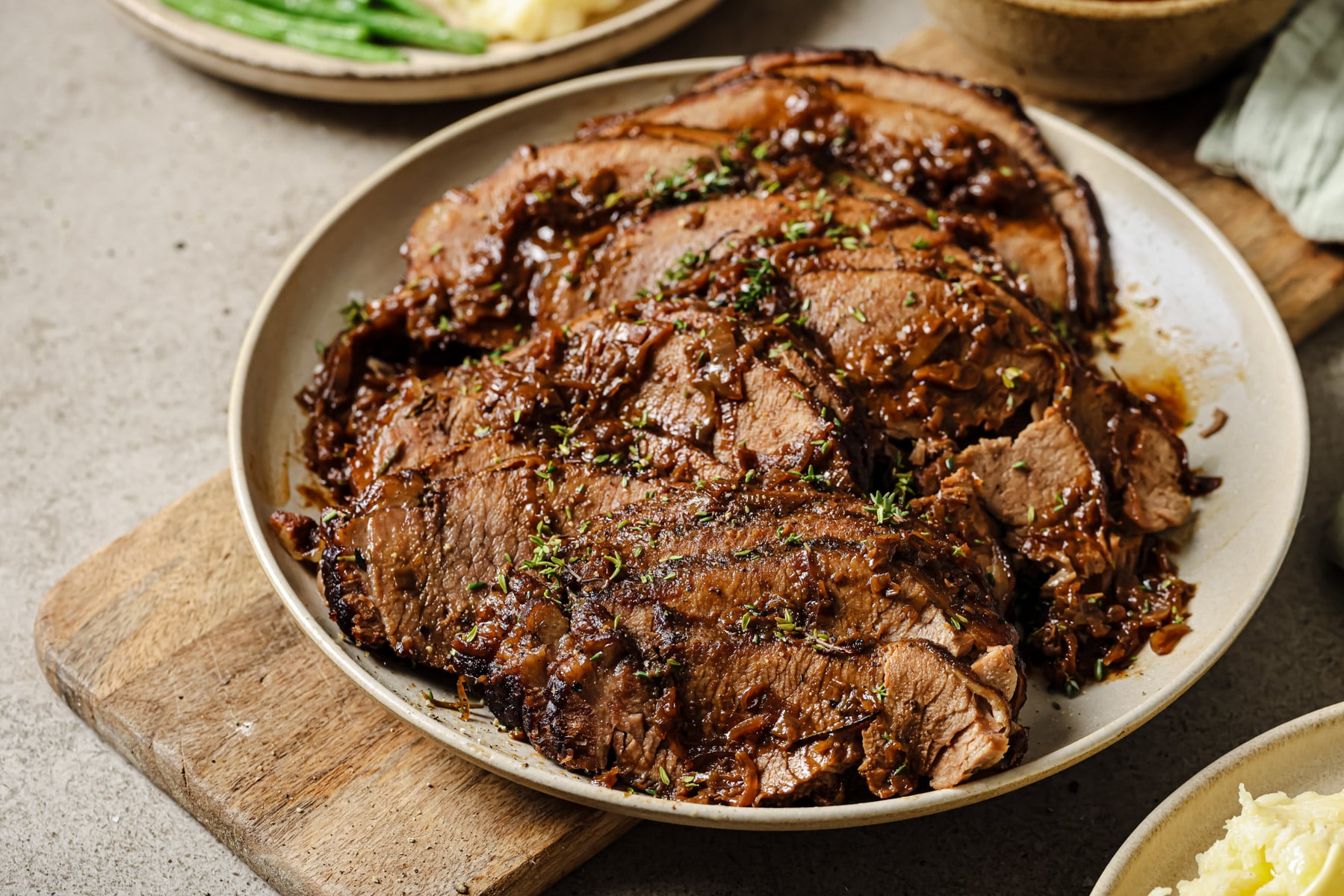
Classic side dishes include creamy mashed potatoes, polenta, or crusty bread, and any variety of veggies your heart desires! It’s particularly delicious with roasted root vegetables.
On Jewish holidays, I serve this with creamy noodle kugel made with cottage cheese (a gentle reminder that not all Jewish families keep Kosher!), homemade cinnamon applesauce, and oven-roasted Brussels sprouts.
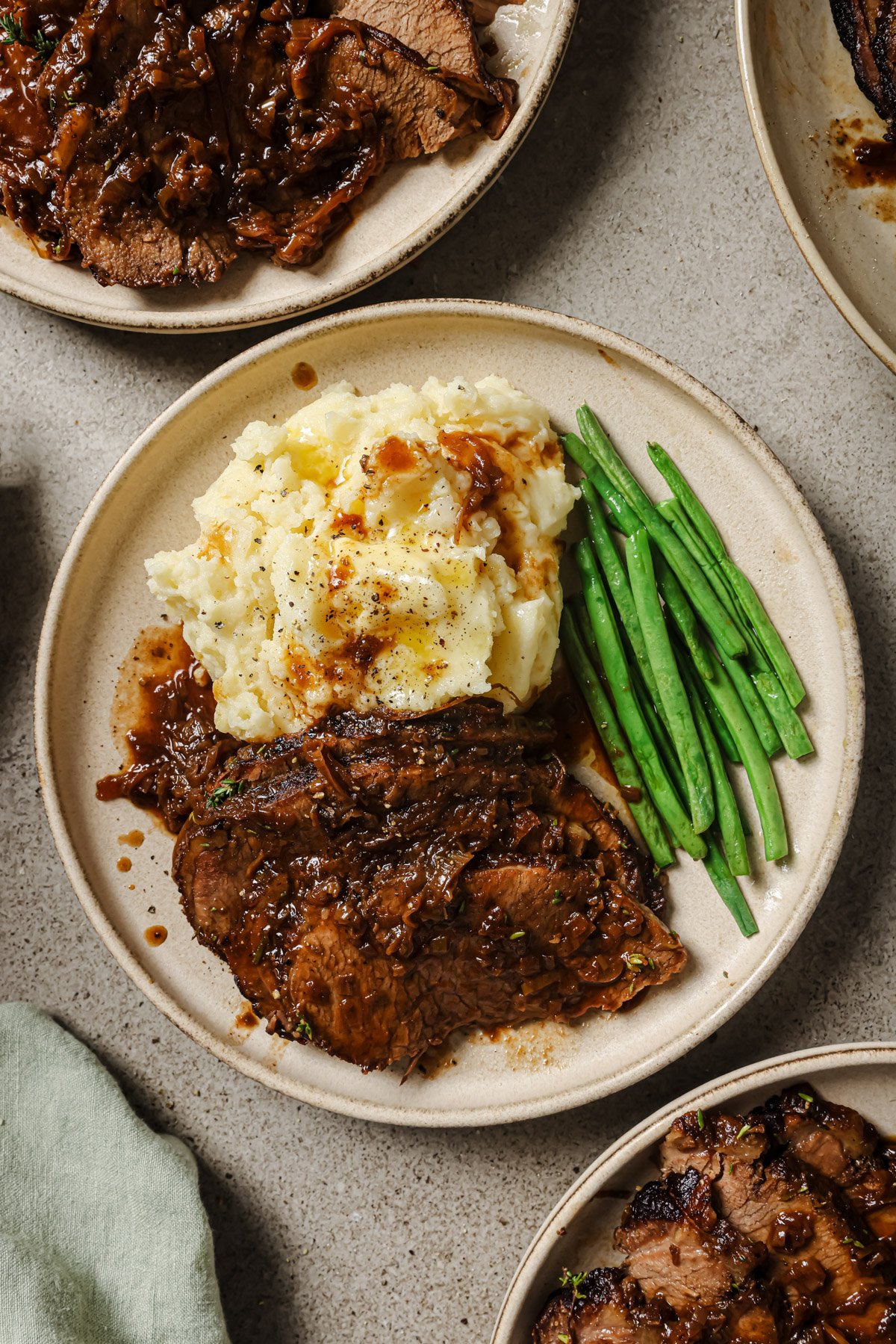
Make it once—and I promise, it won’t be the last time. If you give my family’s Jewish brisket recipe a try, I’d love to know what you think! Be sure to leave a review and ⭐️⭐️⭐️⭐️⭐️ rating below with your feedback!
And make sure to sign up for our newsletter and follow along on Instagram, TikTok, YouTube, Pinterest, and Facebook for more Well Seasoned recipes! Don’t forget to tag us on social channels when you make a recipe at #wellseasonedstudio and upload your photos below! We love seeing what you’re up to in the kitchen!
Tell Us What You Think!
If you make this recipe, don’t forget to leave a review and rating—we value your feedback and it helps us keep creating (and sharing!) free recipes. Your support means the world!
Rate this Recipe
Melt-In-Your-Mouth Brisket with Onions & Leeks
Equipment
Ingredients
For the Brisket
- 3 Tbsp (45ml) neutral oil
- 4-5 lb beef brisket, preferably 2nd cut (point)
- Kosher salt
- 1 tsp freshly ground black pepper
- 2 Tbsp (30g) unsalted butter
- 2 sweet onions, halved and thinly sliced
- 2 large leeks, halved and thinly sliced (wash very well, leeks hold a lot of dirt between layers)
- 4 medium shallots halved and thinly sliced
- 6 cloves of garlic, thinly sliced
- 2 Tbsp (30g) tomato paste
- 1½ cups (360ml) red wine
- 2 cups (475ml) low-sodium beef broth or low-sodium chicken broth
- 5 sprigs fresh rosemary
- 10 sprigs fresh thyme plus more for serving
- 2 dried bay leaves
Ideas For Serving
- Mashed or baked potatoes, grilled or roasted vegetables, crusty bread, or salad
Instructions
- Salt the brisket overnight. Pat the brisket dry with paper towels on all sides, then season generously with about 2 tsp kosher salt on all sides. Wrap tightly in a double layer of plastic wrap, then refrigerate overnight (or about 8 hours). Note: I’ve tested this without salting overnight and it still comes out delicious. I do it when I remember and have time. You do not rinse off the salt after brining.
- Bring to room temperature. Allow the meat to sit out at room temperature for about 20-30 minutes before cooking. Meanwhile, season generously on all sides with 2 tsp more of kosher salt and 1 tsp freshly ground black pepper. Preheat an oven to 350°F (175°C).
- Sear the brisket. In a large Dutch oven or pan, heat 3 Tbsp (45ml) neutral oil over medium-high heat. When the oil is hot and shimmering, add the brisket. Cook until browned, about 5-7 minutes per side. Use tongs to carefully transfer the brisket to a plate or cutting board. Reduce the heat to medium. Do not drain the drippings.
- Sauté veggies. To the pot, add 2 Tbsp (30g) unsalted butter, halved onions, leeks, and shallots. Season with 1 tsp kosher salt, then cook, stirring occasionally, until softened, about 6-8 minutes. (This takes time, there’s a lot in there!)
- Deglaze. Add 2 Tbsp (30g) tomato paste, then use a spatula to help break it up as you stir. Increase the heat to medium-high, then pour in 1½ cups (360ml) red wine. Allow this to cook for several minutes until it’s reduced by about half. Next, add 2 cups (475ml) low-sodium beef broth (or chicken broth).
- Return the meat to the pan, along with any juices that accumulated on the plate. Using kitchen twine, tie the fresh rosemary and thyme springs together, then add them to the pot along with 2 dried bay leaves.
- Cook the brisket. Cover the pot with a tight fitting lid (or seal tightly with heavy duty aluminum foil), then transfer to the oven and cook for 3½ hours, or until the meat is tender. Carefully remove from the oven, then discard the herb bundle.
- Cool slightly, then serve. The brisket will be easier to slice if you let it cool a bit. I’ll often make this the day before, cool completely, then slice and return the meat to the pan. It can be reheated directly in the pan the next day. However, if you’re serving it immediately, simply transfer it to a cutting board, lightly tent with foil, then cool for 20 minutes. Slice into ¼ to ½-inch thick slices across the grain (the muscle lines of the meat). Serve with creamy mashed potatoes or sides of your choosing, some of the braising liquid, and lots of onions and leeks spooned over the beef. Fresh thyme leaves on top is a nice finishing touch. Enjoy!
Notes
- To reheat sliced, cooled brisket: Preheat an oven to 350°F (175°C), cover the brisket tightly with foil, then place in the oven for 25-30 minutes, or until warm. Spoon the braising liquid on top before serving.
- To freeze: Slice, store with some of the braising liquid, and freeze up to 3 months.
- Scaling up: This recipe doubles easily for a crowd. You can also cook two smaller briskets in a large roasting pan, if needed.
Nutrition
Photography by Jo Harding.



Let us know your thoughts!